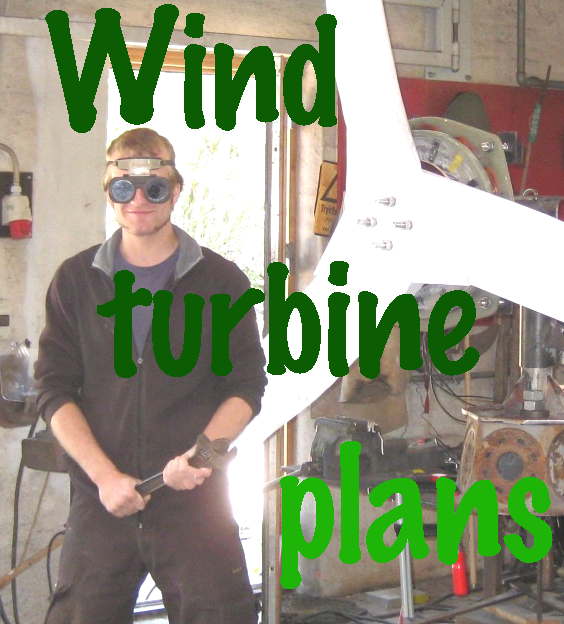
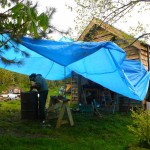
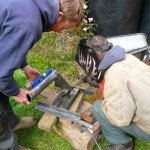
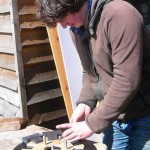
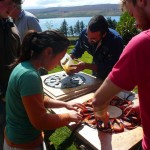
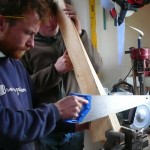
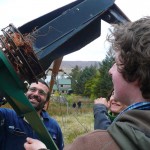
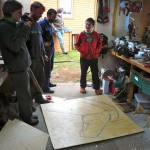
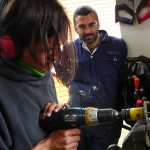
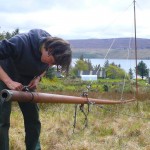
A nice photo gallery by Eirbyte of the recent workshop course in Kilkenny where they built a 4.2 metre diameter turbine.


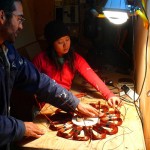
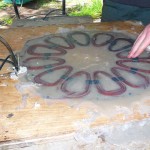
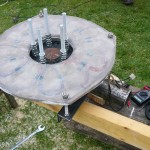
Clever way to anchor the coils while connecting the tails.
See the whole gallery here
A nice photo gallery by Eirbyte of the recent workshop course in Kilkenny where they built a 4.2 metre diameter turbine.
Clever way to anchor the coils while connecting the tails.
See the whole gallery here
I am off to Ireland soon to help teach a course with Jimmy and Miriam of Eirbyte in Leitrim. 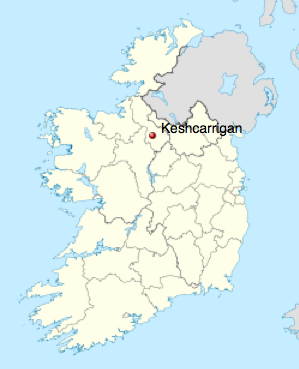 The course runs from 18th – 23rd June near Keshcarrigan
This will be a practical hands-on week of workshop time, running from Monday morning to Saturday, during which we will build a 4.2m wind turbine for an off-grid farm.
Please do not expect to go home with a wind turbine!
Part of the workshop fee is now funded by the Leitrim Development Co so the price for the workshop is now €100 euro. Let us know if you need help finding accommodation or alternatively you can camp at the farm for free, just contribute to the food bill 🙂 Let us know as soon as possible if you wish to camp so that provision can be made for everyone. There will be one meal a day supplied for course participants, plus tea and coffee.
Booking is €100 euro. Send your cheque, postal order or cash to:
Eirbyte Renewable Energy
Curraghnabania
Aughnasheelin
Co Leitrim
Ireland
Or you can use PayPal by clicking the Pay Now Button. Use the paypal option if you wish to use your credit card.
The full story is here


“We also lead workshops on how to build these machines. If you are interested in owning one, a workshop is the best way to learn the ins and outs of maintenance, performance and monitoring. It will also put a wind turbine in your hands at a substantially reduced cost.”
Woody Thompson, is the manager and Operator of Fundy Solar Ltd. He can be contacted directly through any of the following methods:
E-mail: [email protected]
Toll Free: 1.888.536.2070
Local Telephone: 1.506.536.2070
Postal Address: 431 Jolicure Rd., Jolicure, NB E4L 2S3
Note added at end of 2017:
For some reason this page is the most popular page on my blog, and there has been a stream of comments and discussion. I am glad if it is useful but I feel the need to point out that all of the alternators I build now have 3 coils for every 4 poles.
For example 12 magnets and 9 coils as in the 2F design.
I have used several other arrangements but this 10 pole 12 coil one below is the whackiest ever, and although it does work (very well) I am not suggesting it’s the best solution.
– Hugh 2017-
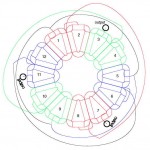
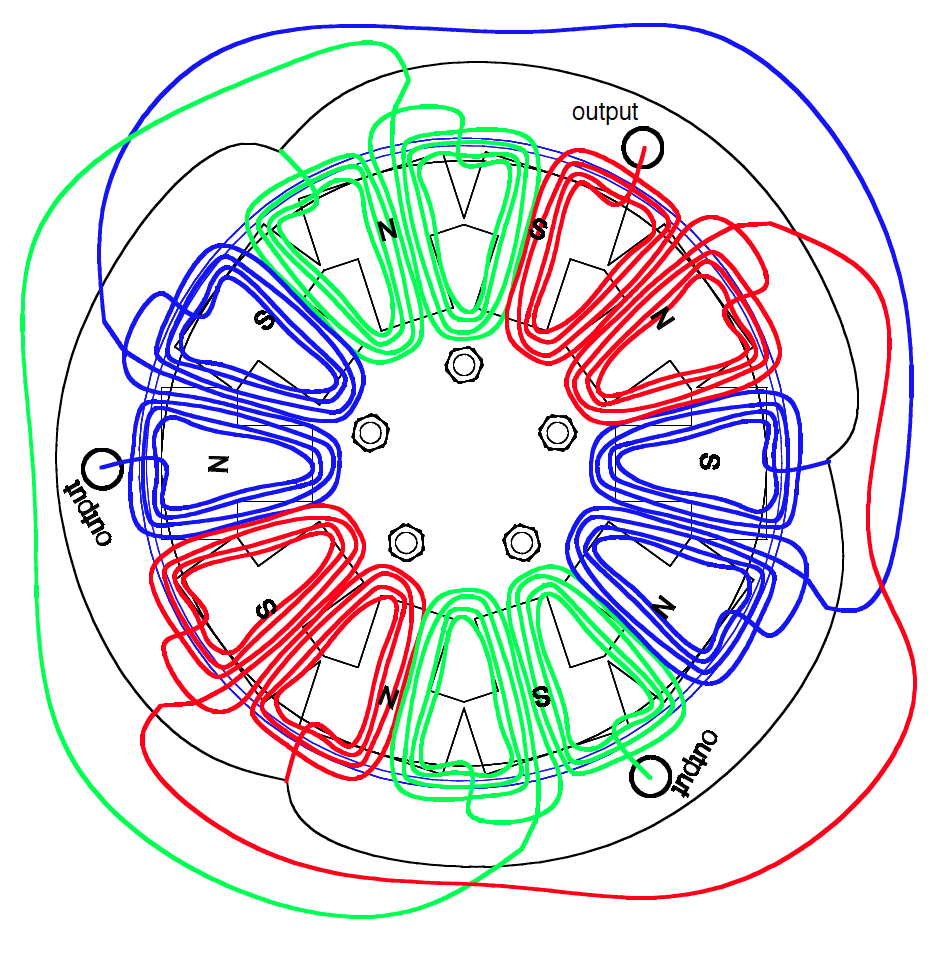 Coils wound in pairs using 2-in-hand 1.6mm diameter wire. Each coil has 37 turns in the one we did for the workshop.
Coils in each pair are roughly ‘in phase’ if one is flipped over as shown. (Actually there is still 30 degrees of electrical phase difference between them, so they are each 15 degrees off the total combined phase angle, which means about 3.5% loss of voltage.)
Pairs that are opposite to each other are ‘in phase’ if connected backwards as shown above. Then the phases are connected in star by linking all of the starts to a neutral (black wires).
This alternator uses 10 poles made from ferrite magnets. When magnets are fitted tightly together like this it makes sense to me to use smaller coils with smaller holes and benefit from the shorter turns in each coil. It’s fun to try something different anyway.
The same winding could work with 14 magnets. But I see no merit in doing this. Maybe somebody can? The inner turns would get more induction from smaller poles, but there would be more leakage flux.
 “The City paid more than $20,000 for a Helix turbine, famous for other “worst turbine install in history” accomplishments, that generated an incredible 34 kWh in the two years since it was installed on a parking garage.
One of Cascade Engineering’s Swift turbines generated all of 129 kWh in its first year.
The Windspire turbine has generated 166 kWh in more than one year of operation.
On the other hand, the Gaia wind turbine outside of town exceeded it’s projections of 10,500 kWh per year-almost half the total generated by all the turbines in the program.”
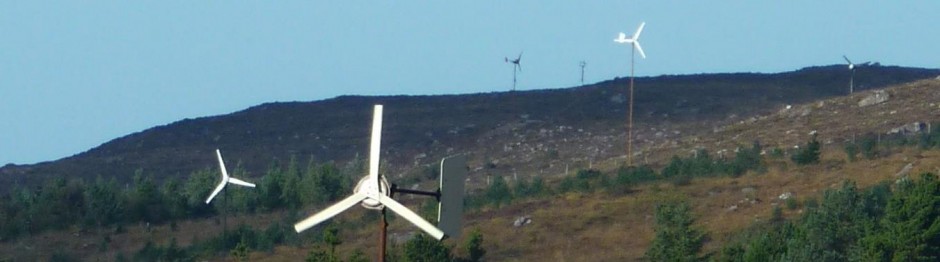
 (This photo shows a Gaia wind turbine for contrast. It’s just an example of a well designed and properly sited small wind turbine that can make economic sense, unlike the rooftop blunders that give wind energy a bad name.)
A well made video by Max ‘Menelaus’ of www.kleinwindanlagen.de showing how to shape blades using a bandsaw and power sander. It’s also interesting to note the reduced number of steps in the process compared to the procedure in my Recipe Book.
I like making things simpler although I have some doubts about the thickness of the result. And I also have doubts about whether I would enjoy all the noise and the dust. I like to use a sharp plane and I enjoy ‘surfing’ the wood with a draw knife, but if you want a quick result then this may be the best solution for you as for Max.
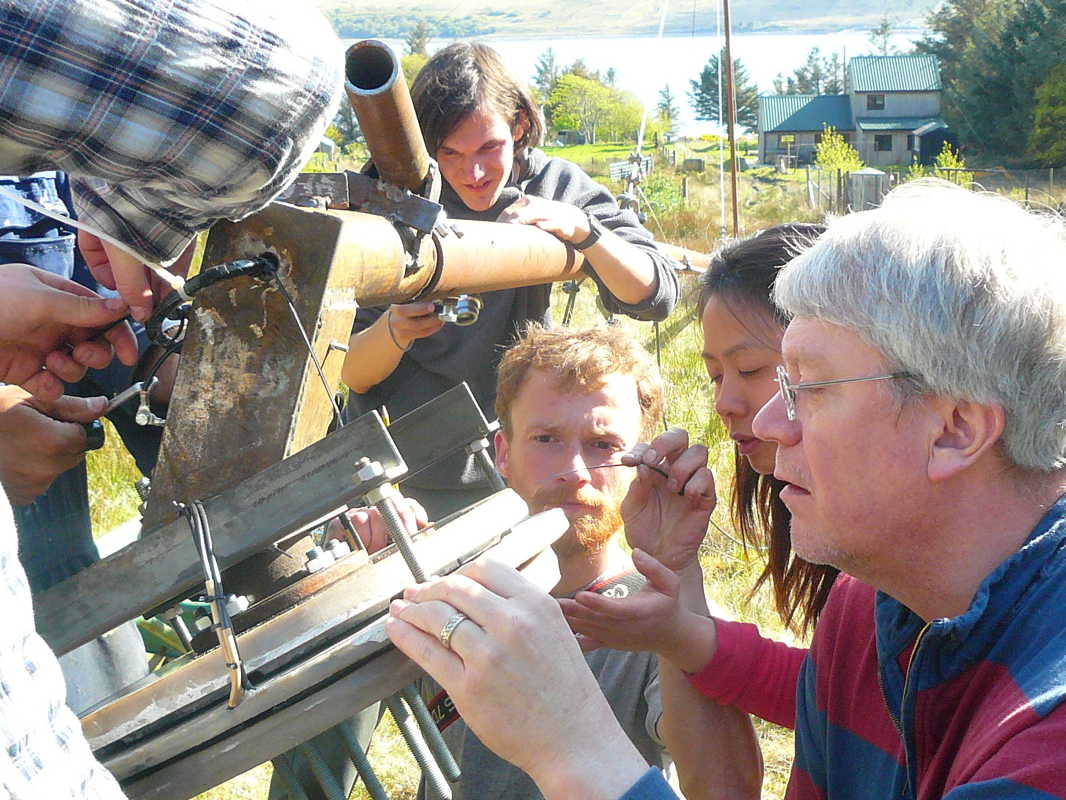
Last minute adjustments
Participants: 6 (Robert, Jonathan, Kostas, Benji, Yanti and Kern)
Dates: 5-12 May 2012 Location: Scoraig.
Project: 3 metre machine using ferrite/ceramic magnets at 24VDC
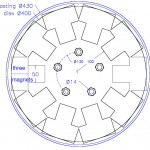
Poles: 10, (3 magnet blocks 50 x 50 x 20 per pole)
Coils: 12 (37 turns of 2 x 1.6mm wire)
Target cut in speed (recipe) 170 rpm
Application – the croft next door to me (for sale) on Scoraig. 24V system and 20 metre tower with dead Samrey prototype on it.
Accommodation the bunkhouse, Scoraig. Full-on home made food and frivolity.
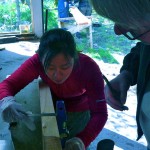
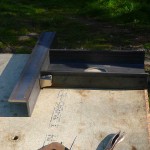
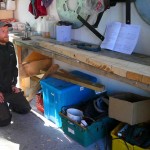
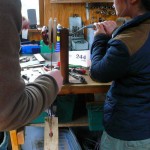
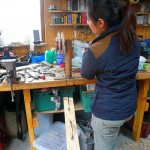
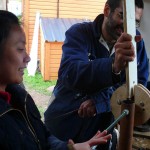
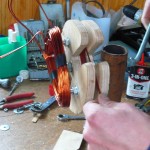
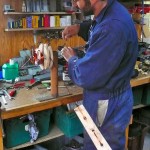


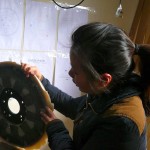

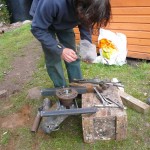
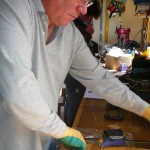
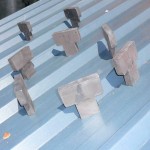



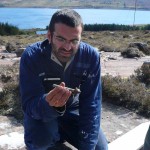

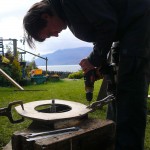
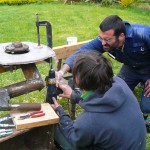
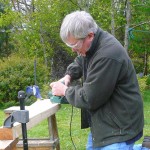
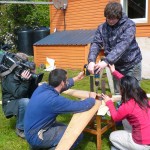
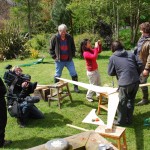
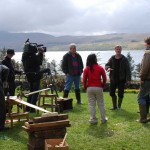

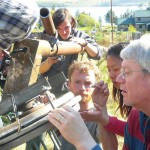
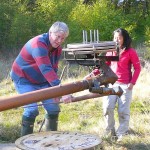
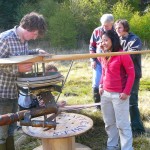
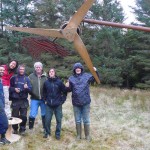
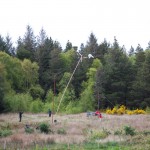
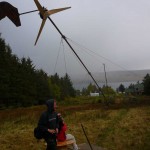
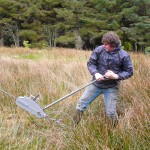
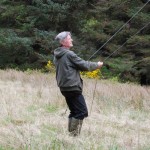


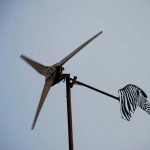

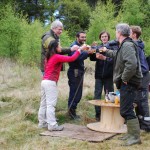
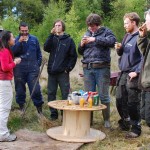
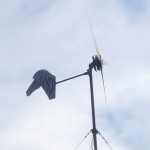
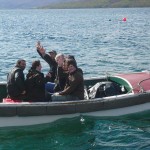

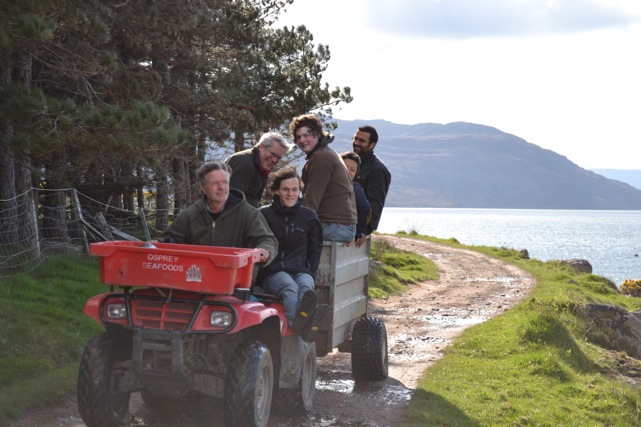 The following video shows Jonathan helping me to put Paul’s (green painted) blades onto the zebra turbine. We also increased the air gap a little to make sure the magnets did not rub on the stator. The cut in speed is a bit higher than I would normally choose for a 3 metre turbine (195 rpm for 24VDC) but it runs very smoothly, and will definitely not stall at least.
Following enquiries from councillors and members of the public, The Highland Council commissioned the Building Research Establishment, an independent organisation, to evaluate all wind turbine installations on or adjacent to school sites.
Based on initial feedback from BRE, the Council has taken immediate action to temporarily suspend operations at all 16 school sites until the risks are fully assessed and any additional measures deemed necessary are undertaken.
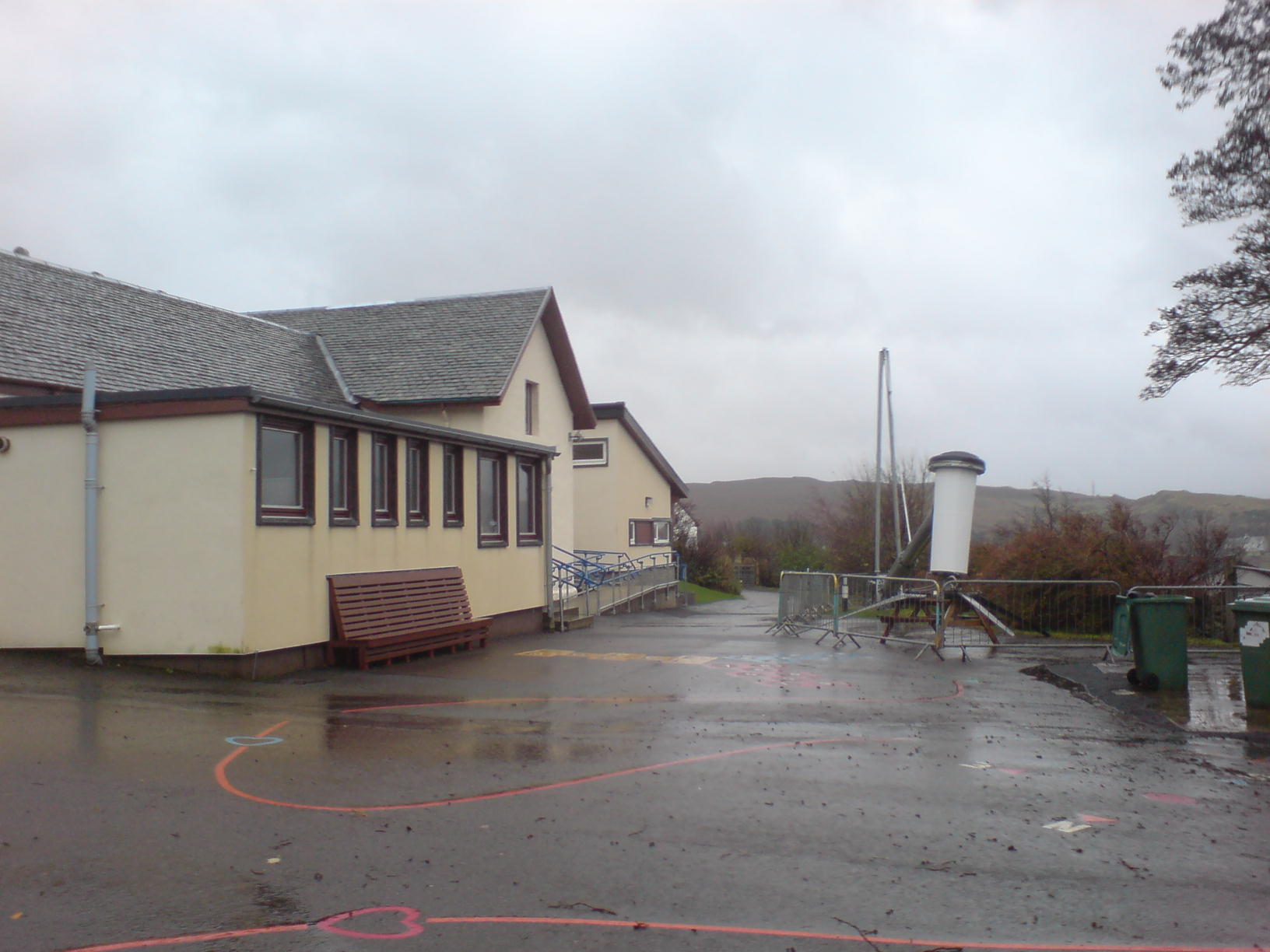
This one was right in front of the school and it threw debris around when it failed.
On 18th June I will be joining Jimmy and Miriam of Eirbyte for another fun workshop course. Facebook page is here. More information here.
Here is a video of a previous workshop with Eirbyte:
See this page for a calendar of all my courses.
And this page for a calendar of similar courses worldwide.

Noam Dotan at Comet-me in Palestine (Community, Energy and Technology in the Middle East) has been sending me some interesting data from the 4.2 m diameter turbines that they build. The design is based on the recipe but they use 20 magnets and 15 coils to increase the efficiency and the maximum power of the alternator.
Here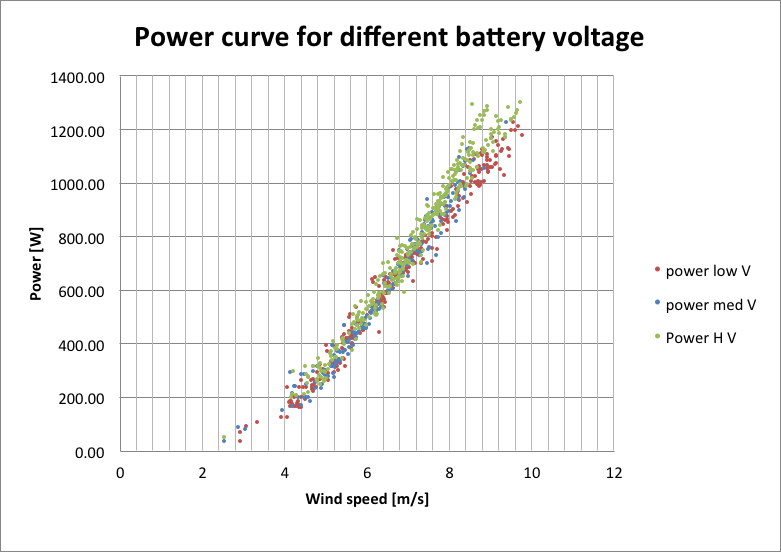 is a scatter plot of power v. windspeed for the battery-charging version from last year. It’s interesting to see how the turbine performs better at higher battery voltages in high winds. At low voltage the tip speed ratio drops below 5 and the turbine stalls.
Lately 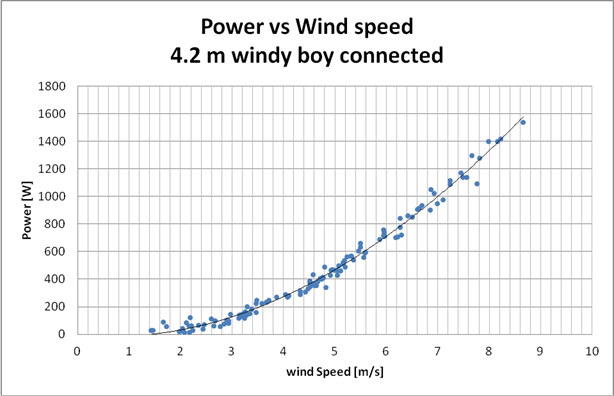 we are seeing data from the grid tied (Windy-Boy) version of the turbine that is linked to the battery via a local grid created by a Sunny Island inverter. Using variable voltage improves the efficiency of both the blades and the alternator in stronger winds. Higher voltage keeps the tip speed ratio up and reduces the heating of the stator by keeping the current down.
Just now I have a visitor on Scoraig, Jon Leary, who is setting up dataloggers to measure the power v. windspeed curves for some turbines here. We are trying to follow the IEC 614200-12-1 standard in so far as is practicable, including the ten minute averaging interval. We are using a Logic Energy mobile logger for the first tests on a 1.8 m diameter turbine. It’s exciting to begin to see measured data for the recipe turbines. This can be compared with wind tunnel tests reported on the WindEmpowerment site. The wind tunnel helps to shed light on the effects of Reynolds number and yaw angle etc in detail, whereas real world testing is the only way to determine the real world energy production of a turbine. In fact earlier standards documents for wind turbine performance testing explicitly exclude the use of wind tunnel data.