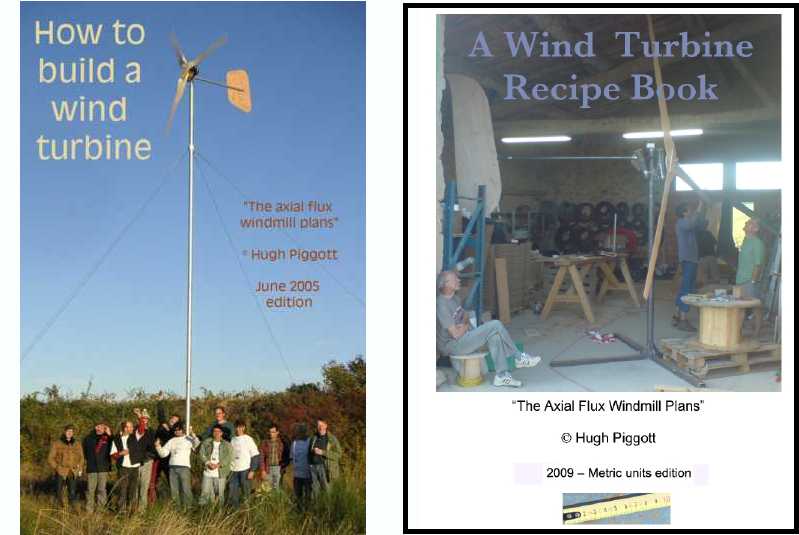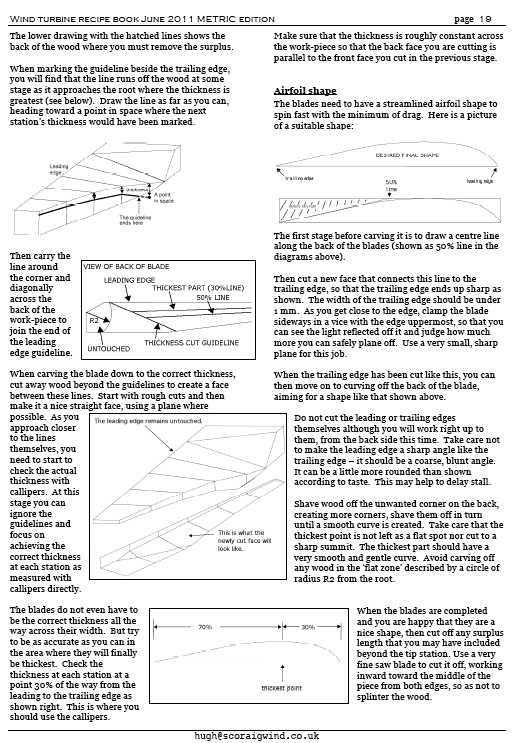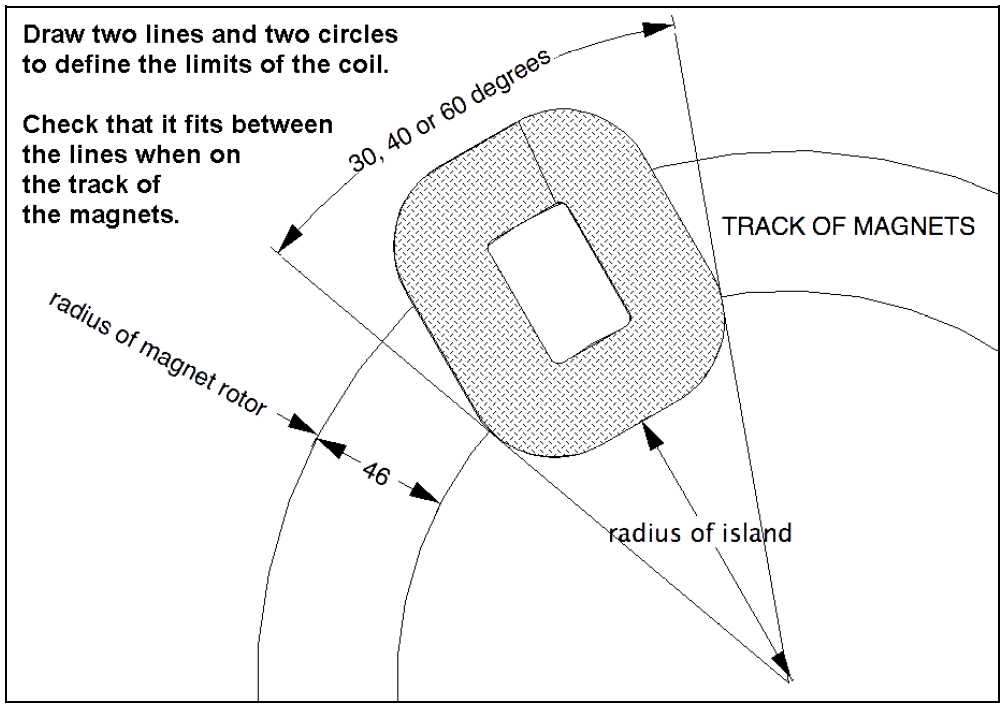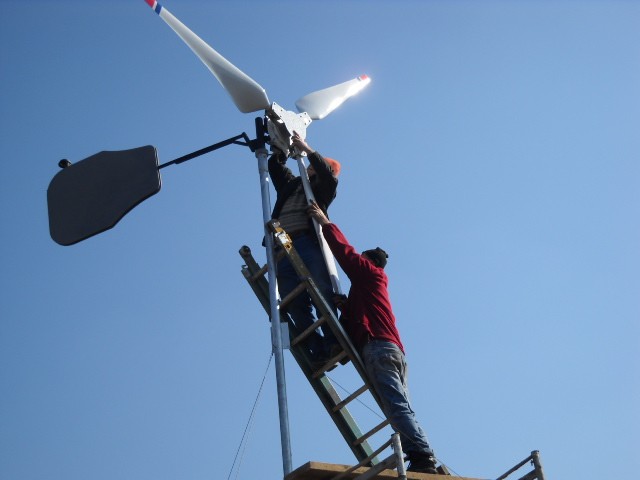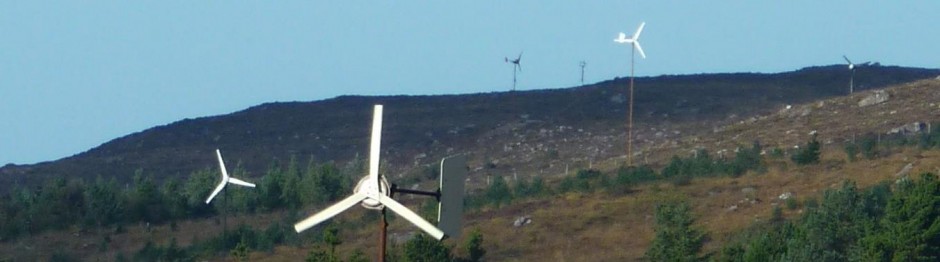
Wind turbine construction workshops in Athens

Nea Guinea (neaguinea.org), is a collective in Athens, Greece

“On the renewable energy workshop we organize two kinds of workshops, one on
the construction of DIY PV panels and the design and installation of small
scale hybrid systems and one on the construction of small wind turbines based
on your Recipe Book. The wind turbine workshops are usually twice a week and
last for 3 months. We have been doing this as Nea Guinea since the spring of
2010 and we have organized three work shops since then, one in spring 2010
were we built a 12V 1200 SWT, in autumn 2010 we built a grid connected 2400
SWT and in sring 2011 we built a 12V 1200 SWT with a secondary school. We will
be starting soon with the autumn 2011 SWT which will be a 24V 3000 SWT. ”

Posted in construction, courses, People | Leave a comment

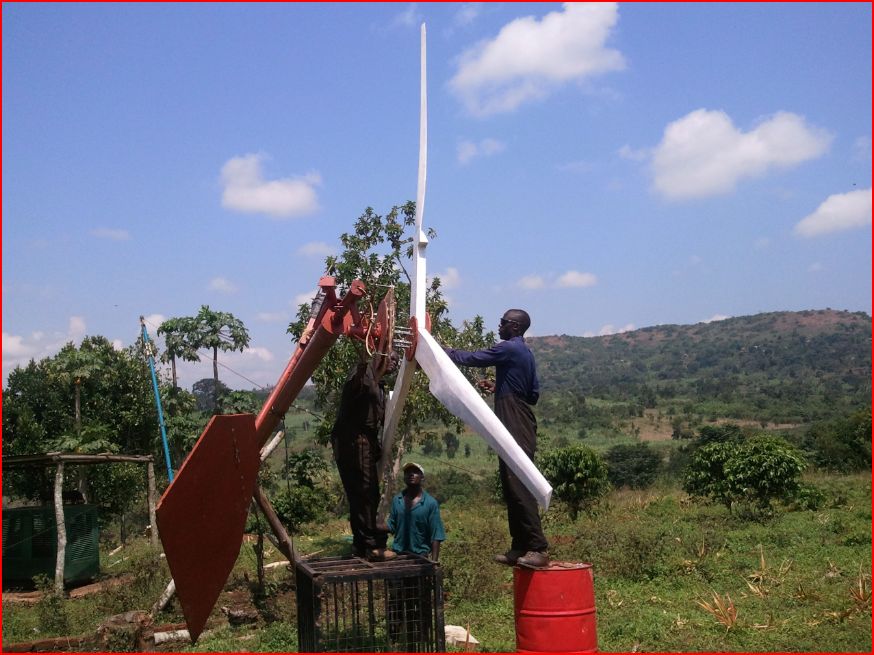
Gallery: Uganda Veterans Wind Power Initiative

My thanks to Mr. AGWOTU SAMUEL for sending me a big pile of photos from Uganda.  See the full gallery here

Posted in construction, developing world, People | Leave a comment

Trends in the small wind industry

David Sharman of Ampair has given me his presentation slides intended for the Small is.. conference, and has permitted me to publish them on this blog.  They are worth a look for anyone interested in the past and future of small wind, especially in the UK context.

(Download them in pdf format by clicking on one of the links provided)

Small wind trends DS 02 09 11

Posted in People, UK small wind scene | Leave a comment

Photo gallery from Romania

See Dan Paraipan’s photos here

http://scoraigwind.co.uk/?page_id=702

Posted in construction, People | Leave a comment

Airgap flux experiments at CometME

Noam Dotan has been sending me results of some interesting tests that he has done on two alternators:

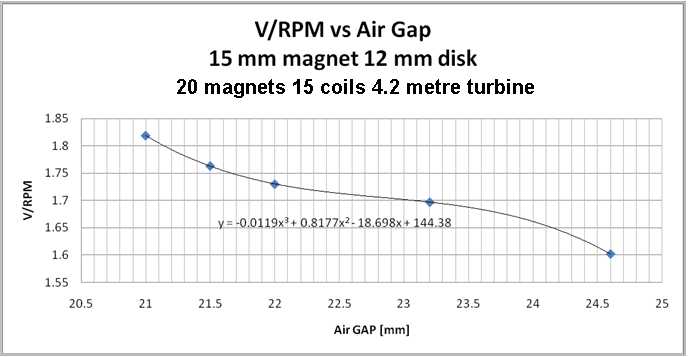
  • 4200 diameter turbine grid-tie alternator with 20 magnets 46 x 30 x 15 mm and 15 coils 260 turns of 0.9mm diameter wire.
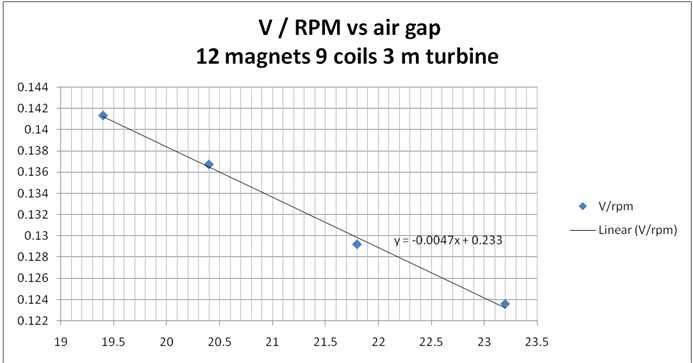
  • 3000 diameter turbine 24-volt alternator with 12 magnets 46 x 30 x 10 mm and 9 coils 55 turns of [email protected] diameter wire.

Noam has been varying the air gap, and then measuring DC output at various speeds to arrive at Vdc/rpm for each air gap.  This (volts/speed) is an indication of the flux density in the gap.  In the case of larger gaps, tests were done with a stator in the middle, and the flux was probably stronger close to the magnet faces.

This curve has an interesting ‘sweet spot’ that is hard to explain where the gap gets wider without affecting the flux very much.

This one is more linear.  The drop in voltage reflects a drop in flux density in the air gap which in turn is due to the increased reluctance of the magnetic circuit with the larger gap.  It’s a trade off: more room for copper wires means lower voltage induced in each wire.

If we are looking to optimise the gap so as to get mimimum stator resistance for the chosen operating voltage, then flux density has higher value than gap width.  A higher flux density means fewer turns of thicker wire, so the effect of flux on resistance is squared.  Wider gap simply allows thicker wire (although the calculation is more complex since you need to allow mechanical clearance and thickness of resin and/or glass on coils/magnets).

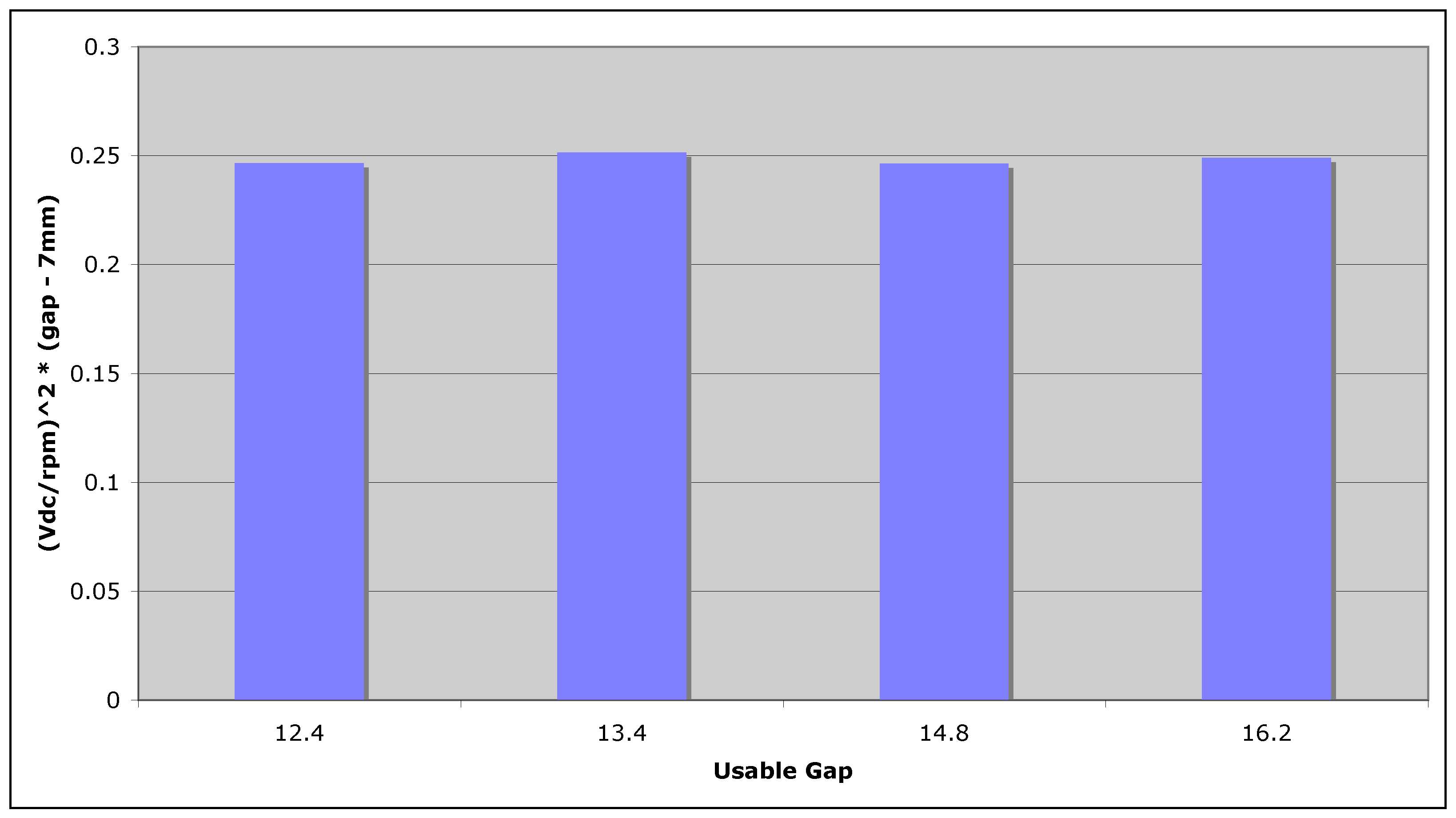
The chart below (using 3 metre turbine data) multiplies the usable gap (gap minus 7mm) by the square of the voltage to get an index of the value of that option and they are all pretty much the same.

From this I conclude that we are around the top of the optimisation curve, which will be a pretty broad peak.  We can choose our air gap based on available wire sizes and suffer no big penalty for using a larger or smaller gap so long as we do a good job of filling the space with copper and choosing the right number of turns.

Thanks for the data, Noam!

CometME have installed 7 home brewed wind turbines of 1 KW per the Hugh Piggott ‘Recipe book’, and in the next two month they will install another 5 home brewed turbines of 2 kW each. They build hybrid solar and wind systems, and by now they provide more than 150kWh daily for more than 1000 people.

Facebook page for CometME

Posted in CometME, construction, developing world, People, wind systems tutorial | Leave a comment

A simple counter, based on low cost calculator

Noam Dotan has published this from CometME in Palestine:

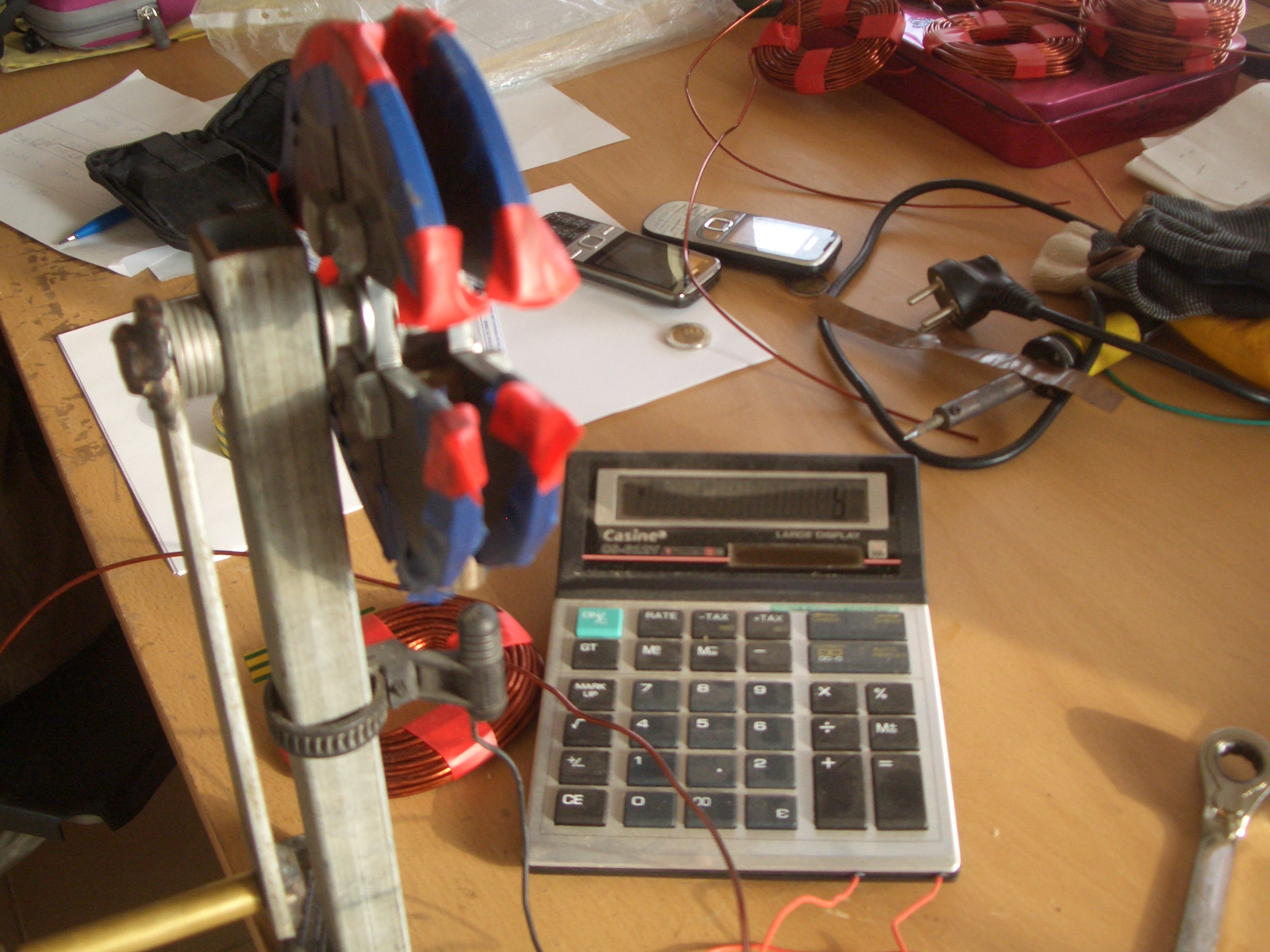
Counting the turns may be confusing especially if you need to wind some 260 turns per coil. A simple counter is based on low cost calculator where the ‘=’ key is wired through a magnetic switch (like the one on a bicycle speedometer) and all you have to do is key in :1 + =. each time the switch is activated by the magnet in each revolution, the ‘=’ key is ‘pressed’ and the number increased by

Posted in CometME, construction, developing world | 1 Comment

Is small scale wind a truly appropriate technology in developing countries?

Thanks to Robin Lovelace for these videos of a debate at the Small Is… Festival 2011 between Teo Sanchez (Practical Action), David Sharman (Ampair), Aran Eales (V3 Power), and David Howey (Oxford University).  The debate was ably chaired by Steven Hunt.  Here is a link to the whole set of videos on youtube.

I still don’t know myself whether it makes economic sense to build small wind turbines locally to help the poor but it’s certainly a lot of fun trying to.  And it has been proved that building wind turbines does tend to make people happier. Our work is as much about empowering people as it is about powering their homes.

David overplays the threat of people stealing his intellectual property and putting him out of business, but he brings a refreshing reality to the discussion.  And it is true that volunteer and aid programs can just as easily undermine local business development as they can foster it.  David has sent me his Small wind trends DS 02 09 11 slides for the presentation.  They contain some bewilderingly crucial facts about small wind development in the UK.

Solar energy may very well prove cheaper than wind energy, but a mix of wind and solar on a good wind site is hard to beat.

Posted in construction, developing world, People, UK small wind scene, Video links | Leave a comment

The old diffuser scam resurfaces in Japan

Yawn Here we go again with claims of getting 3 times as much power by putting a fancy hoop around the wind turbine and mounting it at ground level.  And people will get fooled again and lose their money again.

Here’s a link to the story last time they tried it, in New Zealand

Posted in products/technical, Rooftop madness, Video links | 3 Comments

A vacancy at I Love Windpower – Tanzania

There is a vacancy at I Love Windpower – Tanzania for a student (M.Sc. internship) on the subject of developing a wind map of Tanzania. As long as no suitable candidate has been found, the vacancy will be open.

Establishing key figures for a Wind map of Tanzania
Who: Academic student Physics or Business Management
or related in field of Renewable Energies
Period: 1st September 2011 – 1st December 2011
Location: Dar Es Salaam, Tanzania
website: www.i-love-windpower.com/tanzania

Contact: Roland Valckenborg for more.

Posted in construction, developing world, Notices, People | Leave a comment

Chris Olsen photo

Chris sent me this photo of one of his chain-driven machines, taken with a security camera mounted on a neighbouring turbine.

Chris writes:

This is a photo of one of my 12G turbines on a 200 foot tower that powers an off-grid home in the Boreal Forest of Central Ontario, Canada.  The photo was taken by a remote control security camera mounted on the adjacent tower which also has a 12G turbine on it.  These two machines, combined, have averaged 32 kWh a day on those 200 foot towers, meaning they have each produced an average of 660 watts, 24 hours a day.

These machines are hard at work every day up there, 175 miles from the nearest grid power lines, and the only way you can get to this location where the turbines are is by float plane.  The nearest road, which is just an old logging road that’s not used anymore, is about 40 miles away.  I hauled these turbines up there in May with a De Havilland DHC-2 Beaver converted with a Pratt & Whitney PTA6-A turbine engine in it with 750 shaft hp.  I landed on MacDowell Lake when I delivered the turbines to the remote fishing camp where they are installed.

some people have all the fun 🙂

Posted in construction, People | 4 Comments