Kostas is holding another course near Athens in October. The course will be held in English and it follows the usual pattern – predominantly practical work learning new skills and gaining a deeper understanding of the concepts. More here

Kostas is holding another course near Athens in October. The course will be held in English and it follows the usual pattern – predominantly practical work learning new skills and gaining a deeper understanding of the concepts. More here

Schams Electro nic in Germany make some neat little MPPT controllers for solar and for wind.
The Windmax MPPT controllers are modular, built from 500W units, with capacity up to 2.5kW. These controllers have built-in protection against over-voltage when the battery is full, diverting surplus power to a dedicated heating element.
Mostly when people ask me about using heaters directly on their wind turbines, I offer them a Solar Converters LDR circuit. This acts a bit like a battery because it works at a fixed voltage. Sometimes I recommend putting a heater in series with the supply cable from turbine to LDR. This allows the voltage to rise and achieves a low cost MPPT effect. But you need to have two heaters: one for the LDR control and one in series.
Schams also offer an MPPT heating controller for those who don’t need to charge a battery or connect their wind turbine to the grid. It’s not on the web page but it is reasonably priced. If you are interested then please contact Schams Electronic. This controller provides MPPT control of the wind turbine and puts the output into a single heater.
Alex sent me an email:
I hope you are well
I am writing to show my CLIPPER
I tried it with my 12 volt turbine
I have the Tristar ts-60 dc and ac Clipper
The CLIPPER use it to control excess voltage in the inverter and works quite well
The clipper is to avoid disconnection of the inverter at 15 volts
The inverter disconnects low battery to 10.5V It also disconnects 15v overvoltage
The CLIPPER is for strong winds or gusts that disconnect me the inverter
But the clipper also use it to see how it would be for example by connecting the midnite 250.
When the wind reaches 80 km / hr with gusts surprise wind turbine and not enough to avoid fast the wind. The Tristar which is scheduled to 14,8V can reach approximately 15v and disconnects the inverter. So the Clipper acts to prevent excess volts
I send images as I did.
Use a shunt regulator Chris Greacen
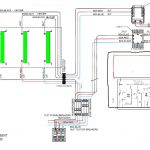
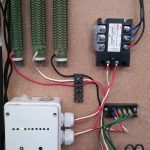
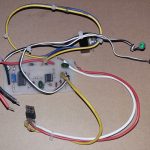
Here is the pdf of the Homepower article that Alex used to make the control pcb that drives his clipper.
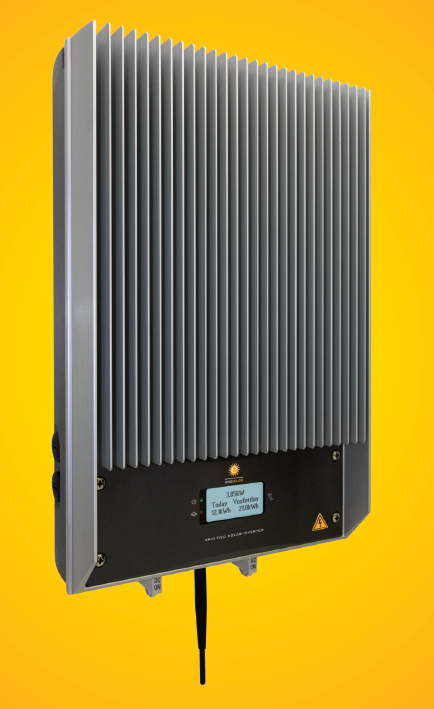 Enasolar inverters are made in New Zealand.
They are fully compliant with UK grid standards G83/1-1 or G59/2.
These inverters are the ideal choice for connecting a PowerSpout hydro turbine to the grid in the UK and other 50Hz AC countries.
Many solar inverters are not compatible with hydro, nor do they come with any warranty or support in this application.
Enasolar inverters are a proven solution for grid tied hydro, with support from both the manufacturers and from PowerSpout.
Scoraig Wind Electric sell these inverters at the prices below (increased in September 2016 due to exchange rate).
A more efficient design means longer life and less call outs.
Wide operating voltage range allows more flexible solar power system design and panel use.
Lightweight inverters with integrated lockable DC and AC isolating switches which reduce installation time and cost.
Independently monitor and verify your installed solar power systems with the included built-in Wi-Fi.
This truly is one cool inverter with a front mounted heat sink which allows more airflow, easy care and cleaning.
For more information about Enasolar and/or PowerSpout hydro turbines, please email me
| Enasolar inverter Model |
Maximum volts | No. of MPPT inputs |
Delivered price excl. VAT |
| 1.5 kW | 500 V | 1 | £949.26 |
| 2.0 kW | 600 V | 1 | £969.30 |
| 3.0 kW | 600 V | 1 | £1,121.13 |
| 3.8 kW | 500 V | 1 | £1,072.87 |
| 4.0 kW | 600 V | 2 | £1,515.43 |
| 5.0 kW | 600 V | 2 | £1,394.20 |
Download the latest manual: EnaSolar-GT-Inverter-Manual v2-3
If you need the configuration software, USB Mini-B cable or sundry spare parts, please contact me.

Marie-Laure Brunel, a Tripalium trainer with 6 years’ practical experience in the Piggott method, will guide you through all the steps of the crafting process.
more here…….
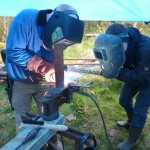
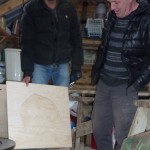
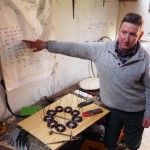
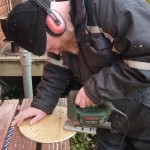
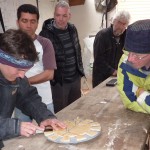
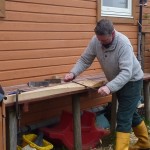
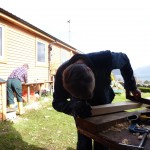
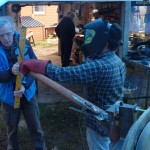
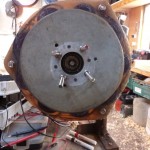
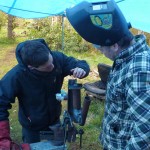
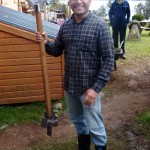
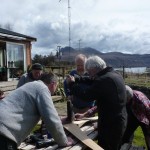
From 23rd-29th April 2016 i hosted a workshop here at Scoraig.
Seven “students”. Co-instructor Jonathan from Austria.
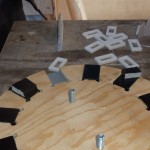
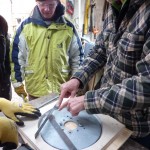
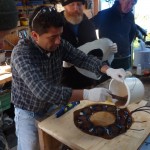
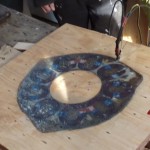
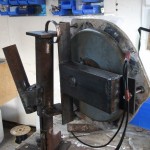
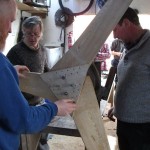
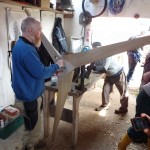
Project was 2.4m diameter 24-V battery charging turbine from the Recipe Book. See also the pdf guide to welding this machine. Mostly it was pretty standard, but we did a new magnet rotor mould design with wood-screws that adjust the height of the disk within the casting. This was the result of a group brainstorm session.
Accommodation at “Drift Wood” with all meals provided.
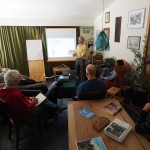
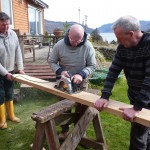
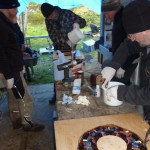
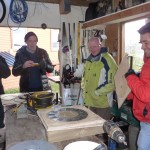
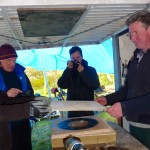
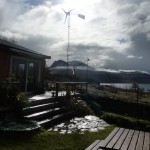
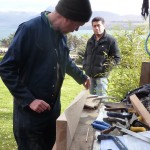
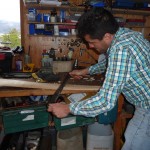
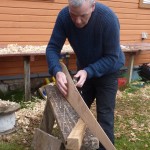
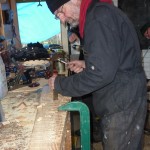
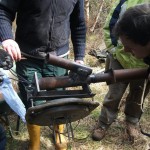
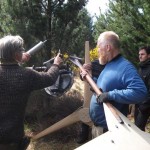
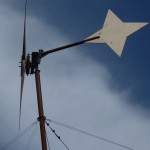
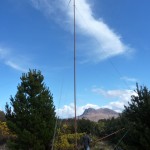
Here are some photos of the week’s events. Mostly mine but some from Jonathan and Mark, thanks!



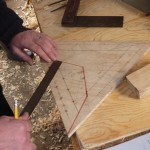
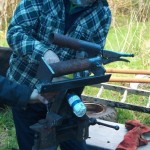
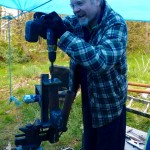











16th-17th April. £225. Organiclea, London
23rd-24th April. £225. Demand Energy Equality workspace, Bristol.
For more information and to book a place visit: http://v3power.co.uk/public-courses/
On the course we collectively build a 1.8m diameter Hugh Piggott wind turbine. All the participants spend time working on each of the three main parts of the build (wood, metal, and electronics) rotating through the different bases on the first day. On the second day we then come together as a group to assemble the machine.
V3 Power is a workers cooperative based in Nottingham. The turbine is a robust design that can be easily repaired, maintained and serviced and is an excellent example of appropriate technology.
Adriaan Kragten has been kind enough to notify me of his latest design work which is documented in his free pdf reports available for download here. Most of his wind turbines have been based on converting induction motors to pm alternators in the past Now he is designing axial flux ones with similar geometry to mine. But the designs are largely untested.
Here is a drawing from report KD571 which is about an alternator for a 1.36 m diameter turbine. Maximum output would be about 80 watts at 670 rpm with alternator efficiency below 40%:
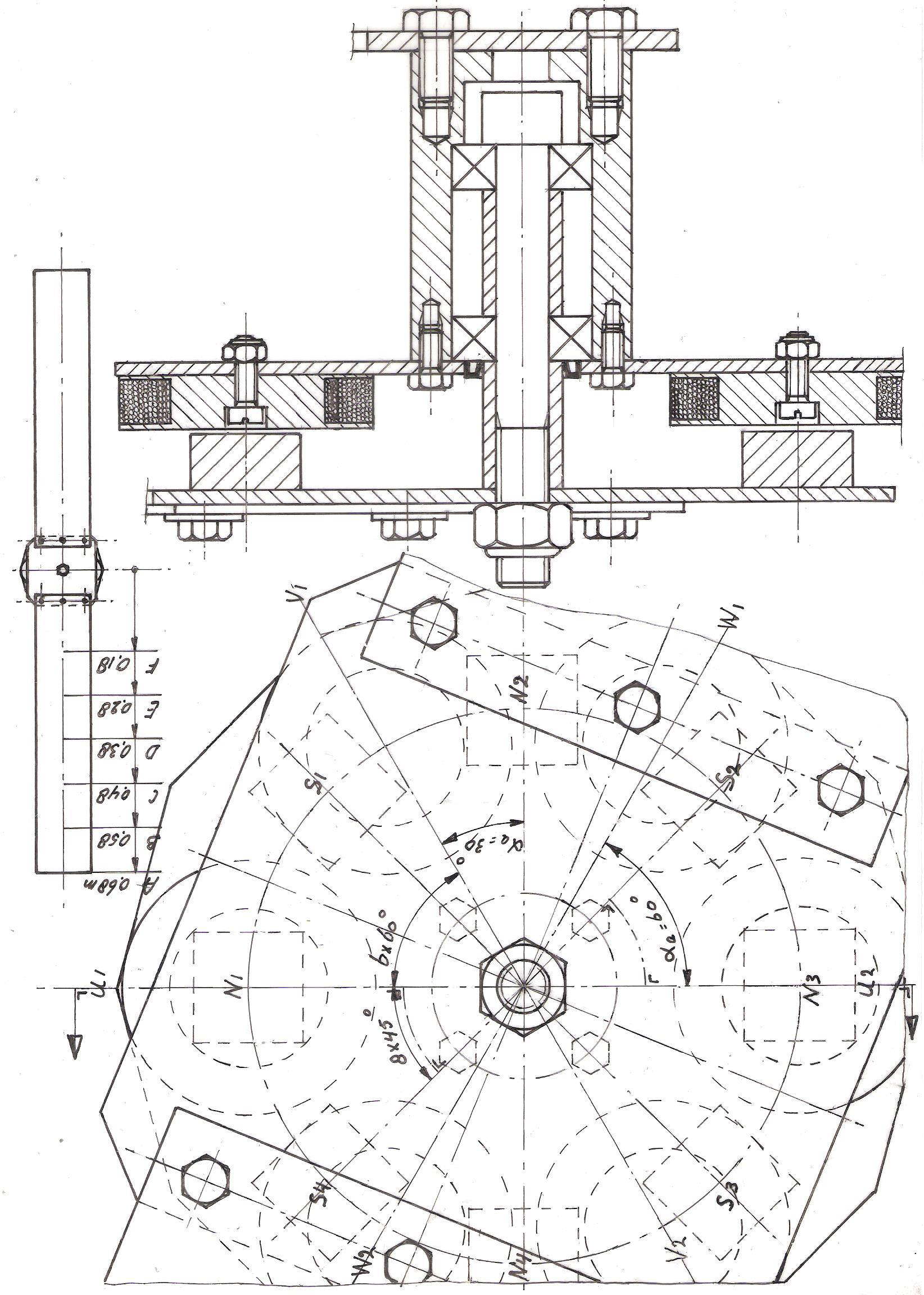
This is a single-rotor machine with a steel disk behind the coils that has rather high iron losses due to eddy currents. My personal view is that although this is easier to construct the loss of efficiency is unacceptable. There are also rather high loads on the bearings. I would prefer a spinning steel disk behind the coils (as in my 1800 mm diameter design in the Recipe Book). But in principle this design will work and deliver useful output.
Adriaan has gone on the design a larger version in KD596, using 12 magnets (but at lower rpm) to achieve 50% higher power output with similar efficiency. He speculates that it might be worth overlapping the coils to obtain better usage of the space. I have seen this down a couple of times with axial flux alternators using specially designed presses etc and it can offer slight improvements in efficiency.

So Adriaan is looking for somebody to test this idea and others, most likely as an electrical engineering project. I suspect that he would be a helpful mentor, and much would be learned.
Finally I’d like to say mention a couple of pitfalls that engineering students tend to fall into. One is that you do not want to test this with a resistive load. Test it with a rectifier and a battery for realistic results. Second is do not worry about Hz or try to obtain a 50 Hz sine wave output. That is not relevant for small systems where the output is going to be converted to DC. Finally please do not use a vertical axis blade design for the turbine. For some reason everyone wants to do this, and it is a huge mistake.
Ian Woofenden has decades of experience living off-grid and teaching workshops.

This workshop provides an introduction to all the major renewable energy technologies with a focus on designing and installing small, rural systems. We’ll get our hands dirty — the majority of the workshop is hands-on field work, and it also includes classroom sessions and the following projects: 1) building and using solar ovens, 2) a solar hot water or solar-electric system, and 3) installing a methane biodigestor. This is an experiential program, with a non-technical, overview focus. These hands-on installations give participants the opportunity to interact with local members of the community, experience both the challenges and satisfaction of working within the developing world, and the opportunity to install systems that can dramatically improve the living conditions of the local people. …read more