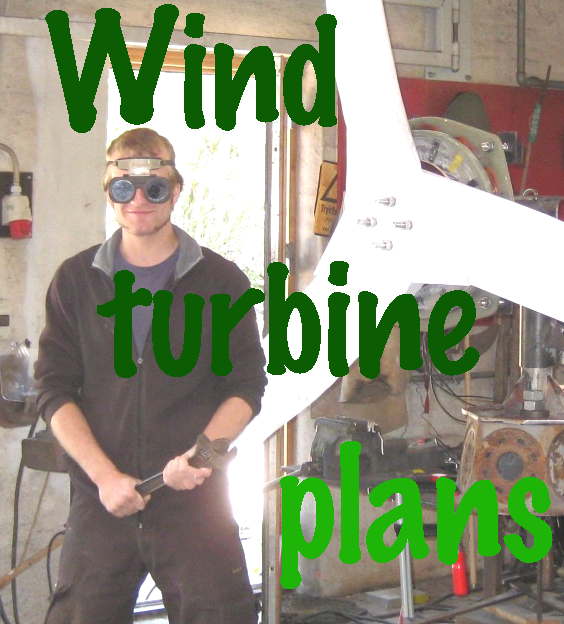
Jonathan Schreiber has a new website announcing his workshops in Austria this summer:

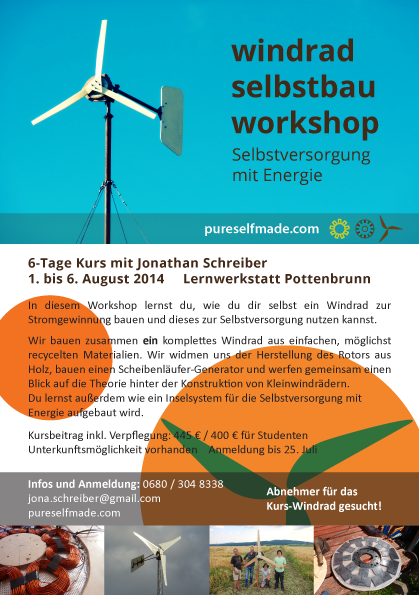
Jonathan is using my new designs for 2 metre ferrite magnet wind turbines (2F).
I plan to publish these soon.
Jonathan Schreiber has a new website announcing his workshops in Austria this summer:
Jonathan is using my new designs for 2 metre ferrite magnet wind turbines (2F).
I plan to publish these soon.
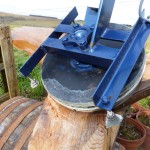
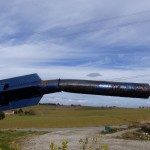
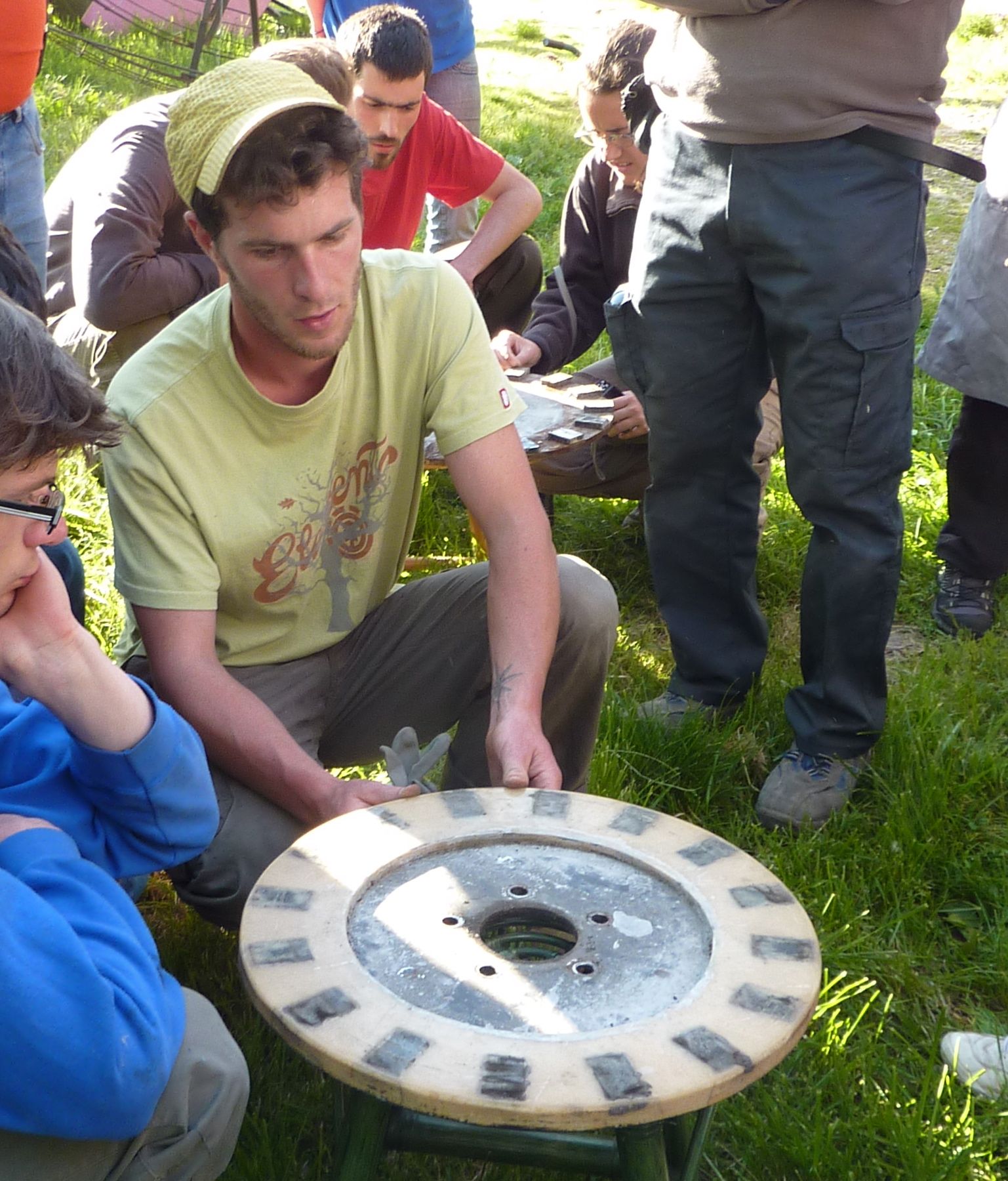 Gilou at Tieole writes from France:
This year, we are confronted with a lot of violent wind. And the 4200 model break a lot.
This winter, I think 8 wind turbines are broken. A lot of tails have jump and break blades.
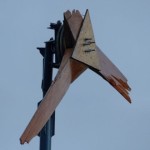
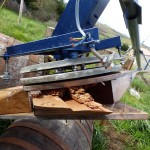
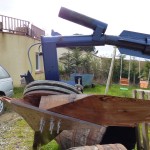
Recall you the wind turbine we have built at L’ile on May. It’s broken but it’s really incredible. Blades, stator are broken and the top of the tower is folded.
I have use a 76 mm hydraulic pipe for the top of the tower.
It’s good to share pictures like this because damage does happen. The hard thing is to find out what went wrong first, because most of the damage probably happened after the first failure. For example when a tail jumps off this most often happens as a result of a broken blade ( being out of balance, the machine shakes the tail off), but it’s also possible that the tail broke the blade somehow.
When I look at the bent yaw pipe I think that’s most likely to be the first failure. But the most likely reason for the pipe to bend would be gyroscopic forces so I suspect that there were strong gusts of wind and maybe the machine was also over-speeding at the time. Then if the blades are spinning fast and the machine suddenly yaws away from the wind in a gust you could see a failure of the yaw pipe like that. After that it’s easy to explain the blades and tail failing. I suppose that the damage to the stator was caused by the blades. But we don’t really know if the whole thing started with the stator coming loose, breaking, then overspeed, then bent yaw…
It’s important to analyse every clue to try to find out the original cause of the crash. How to prevent it in future?
The 4200 is designed as a low windspeed machine with large blades in relation to the alternator and frame. The idea is to get maximum power in low winds so it works for us every day. But it’s not the strongest survivor in storms as we have learned from the winter experience in France.
Comet-me build 4.2m machines using a design they have adapted from my recipes. They put them on some very windy sites! Maybe we can learn from their designs… Noam has sent me a document and I am pasting a link to it below. But the yaw pipe is only 73mm in these drawings.
Chris Olsen has made a nice series of web pages and a video describing how to build a high voltage (48-150VDC) turbine with diameter around 3.2-3.5 metres. This works nicely with the Midnite Classic controller to charge batteries.

More from Chris here.
“Hello there from Wyoming.
Just a note to let you know we live in remote Wyoming at 7000ft.
We bought over 4000.00 in junk wind generators, all popped and fly off pole.
We have LOTS of wind, we can get 3 days and nights of 70 mph plus winds here.
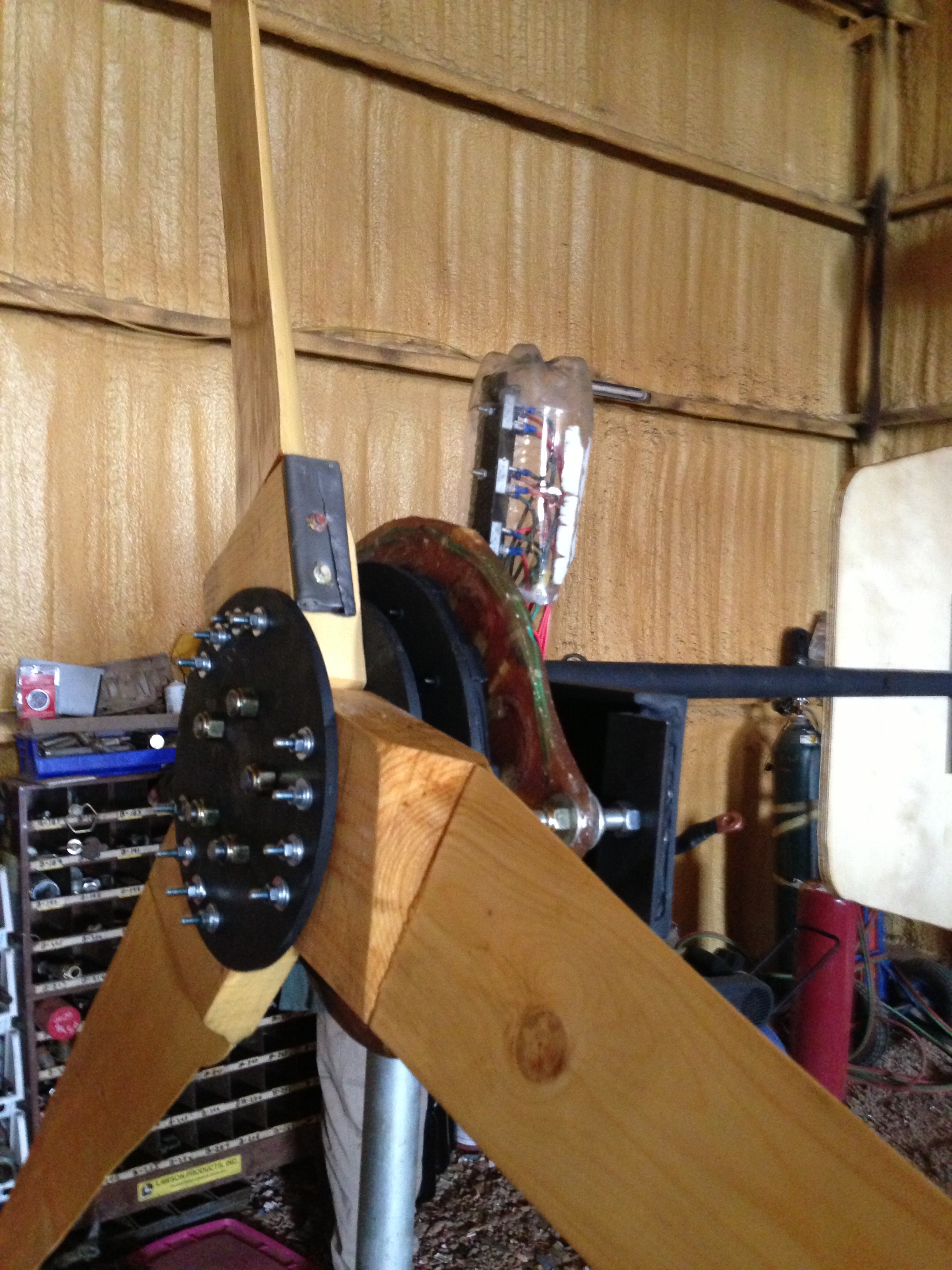
My son bought your plans book and built your windmill. we now have two.
SO far they have lasted over 2 years no trouble at all. We get temps to 38 below Zero here and they still work perfect.
Here is a picture.
—
Thanks Very much

Eolsenegal have a new web site giving details of their services. Wind turbines are built to my Recipe designs.
I am planning to hold a course here on Scoraig at the end of April. We’ll build and test a wind turbine as usual. Accommodation is provided from Saturday 26th April to Saturday 3rd May. These will be the arrival and departure days. The course will run for six days from 27th to 2nd. Your partner may be able to find accommodation here too without attending the workshop. Please ask for details.
See photos of 2012 course and 2013 course and a video. Cost will be £750 including accommodation. I may be able to offer a limited number of student discounts if there are enough people paying full price.
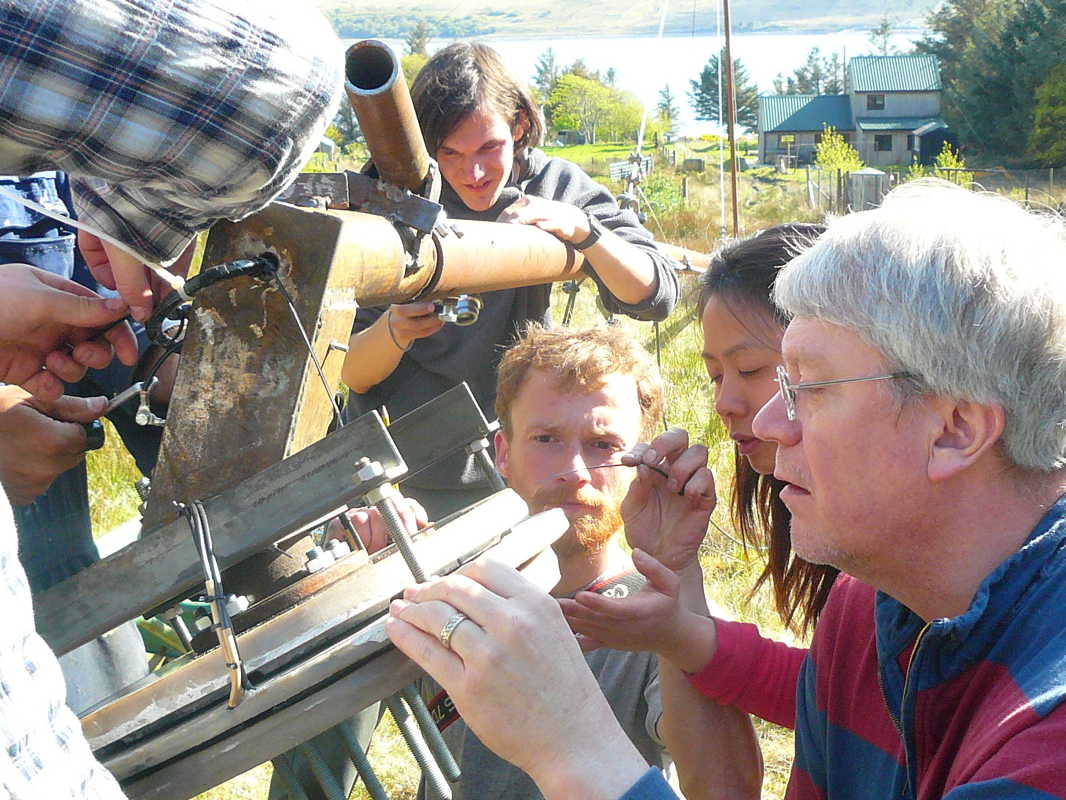
Contact me for more details and to book a place. I do not plan to travel around teaching courses this year as I have done over the last 12 years or so. This may be your only opportunity to be taught by me personally, although there are several other groups worldwide offering courses based on my Recipe Book or derivatives of it.
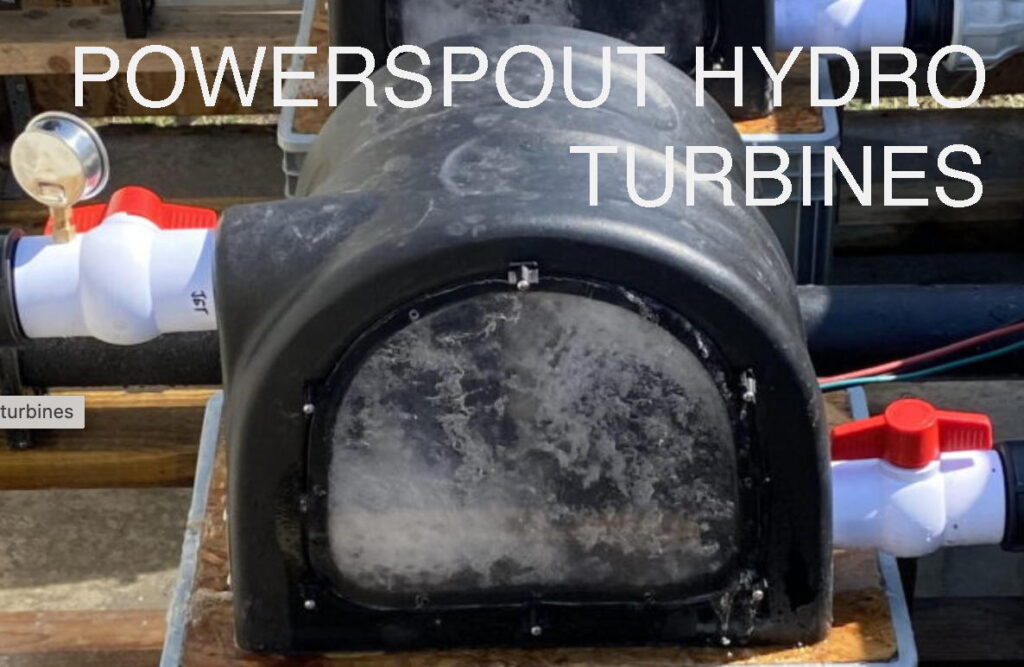
BabyHydro DIY installation guide 2016 with details of how to obtain relevant consents in Scotland.
Energy savings Trust guide to Feed in Tariffs
Here is a document from 2013 describing the steps to obtain Feed in Tariffs for a Powerspout in England and Wales, but now rather out of date although it may help. I am told that OFGEM now want three inputs; planning, network and EA(or latest equivalent).
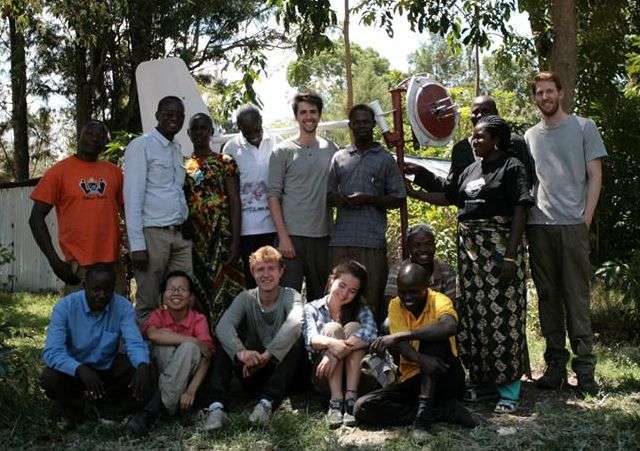
With great success, the first partner project between I Love Windpower Tanzania (ILWPT) and Engineers Without Borders (EWB) UK branch at the University of Warwick took place in September 2013 in the village of Kemgesi, Serengeti region, Tanzania.
The new partnership (facilitated by James Low of Wind Empowerment) saw the two groups install a 1kW wind turbine to provide electricity for a girls boarding school at the Dr Omar Ali Secondary School.
Read the whole story here at “I love Windpower”
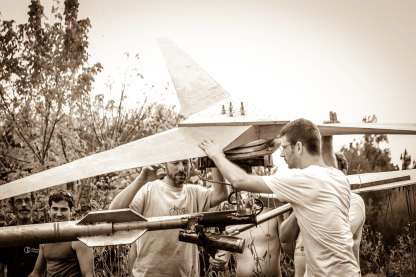
Tripalium held 17 training courses in 2013. One of the highlights of the year was Hugh’s
visit in May followed by the annual meet-up of the thirty odd people who make up
Tripalium. A maintenance guide has been completed and progress is ongoing on a new
version of the manual modified to be more adapted to the French audience.
2013 also went out with a storm, Hurricane Dirk managed to bend one tower, throw-off
one tail, and overload a grid-tied regulator. The bent tower was attributed to the upper
guy wires not being tight enough; the tail was most likely caused by a light disequilibration
of the blades; as for the regulator, we are asking SMA to replace it under
warranty. Not a great way to start 2014.
For 2014, the new manual is nearing the finish, even if correcting the last details will
probably take several months. The wireframe for a new website has been done, so a
new website should be online before the summer. Also this spring, using the new
maintenance guide as a model, we are planning to do our first e-learning video. If this
works well, perhaps we will try to capture some of the steps of building a turbine on
video with clear explanations to each step. And not to forget there are already six
training course dates fixed for 2014.
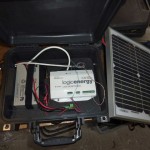
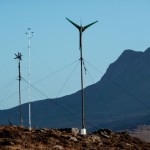
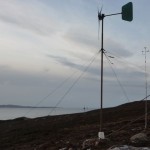
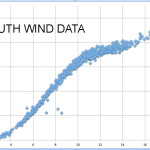
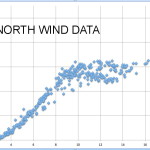
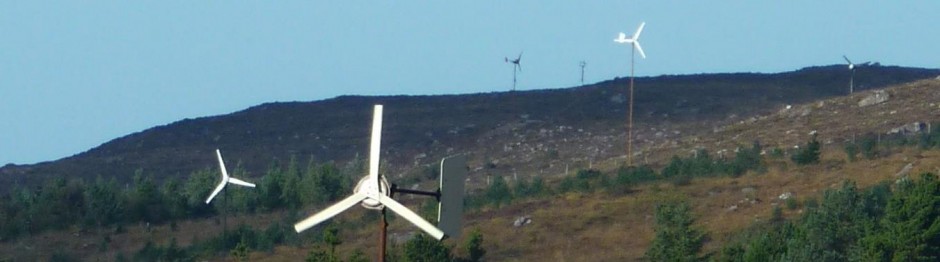
I have been using a Mobile Logger from Logic Energy to collect data on a 3 metre diameter turbine close to my house. The turbine is built to the Recipe Book. In the gallery you can see the site and the measurement mast, which comes from Radioworld.
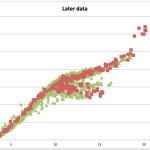
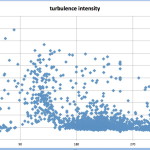
The data is interesting. There is a different power curve for south wind coming up the slope from the north wind blowing down the hill to the turbine. The tower is accurately vertical. This is an example of how site-dependent a power curve is. It depends on many factors including the particular machine, actual battery voltage, cable resistance, and even the wind direction in most cases.
Jon Leary and I have done studies on a number of turbines on Scoraig over the last year or two. I hope to be able to publish more comprehensive information in due course.