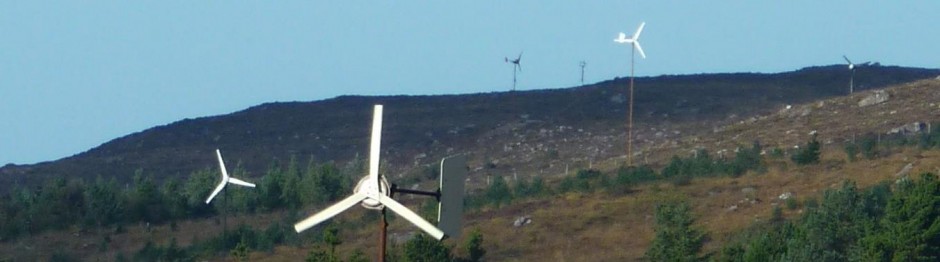
images from France

OPERATION BURLESQUE
A La conquête de nouvelles formes d’activisme
Ne tombez pas dans le trou !

“Entre la parole et les actes, il y a un trou
Plus de vingt ans après la lutte victorieuse contre la centrale nucléaire de Plogoff.
Pourquoi aucune dynamique d’envergure en faveur des énergies renouvelables n’a t-elle émergé en Bretagne?
La lutte se spécialise, s’atomise et se fossilise :
entre les légalistes (copenhague), les bloqueurs(ses), les saboteurs(ses), les partisan(e)s de l’autonomie….
il y a aussi des trous : d’indifférence, d’incompréhension, de mépris…..
La question est de savoir comment transformer l’antagonisme pour ou contre en une complémentarité pour et contre.”

===============================================================“Angélique adopte une figure libre comme l’air mettant, je pense, en valeur le design de la turbine.”
Hubert MARIN
qui termine actuellement une petite éolienne de 1,20m (200W).
Posted in Uncategorized | Leave a comment

The Scottish Government consultation on ‘Permitted Development’ status for small wind turbines

The Scottish Government have published a consultation document
Permitted development rights are extended to certain types of development through the Town and Country Planning (General Permitted Development) (Scotland) Order 1992 (GPDO). They will now be examining the option for new permitted development rights for micro-renewable systems in the context of the review of the GPDO. Responses are due by the 1st February.

Existing planning policy can be found in the 2006 PAN 45 document. It’s a bit loopy in places, and obviously fully sold on the rooftop hype.


“Turbines should be sited in a way that creates a balanced composition that does not undermine the architectural integrity of the building or structure. They are generally positioned on the highest point of the roof, however, to reduce their visual impact it may be possible to locate them at a lower position provided they have a 0.5m clearance from the base of roof. Consideration should be given to positioning the micro-wind turbine at the rear of the property, where visual impact will typically be lessened.”

“Towers should be sited in a way that minimises the landscape impact. Whilst tall towers and hilltop locations will be best for capturing maximum wind energy, smaller towers and low lying locations should still be able to generate sufficient energy to meet the requirements of an average home.”

“Careful consideration should be made to the desired height of the turbine. While it will be important to avoid undue turbulence and areas of low wind speed, the choice of height needs to be carefully balanced with the visual prominence of the turbine in relation to existing buildings and surrounding landscape features. Where possible the height of towers should relate to the height of existing vertical elements in the landscape such as light columns, telegraph poles, trees, buildings and other structures. A turbine sited on a prominent ridge is generally not desirable. Where possible towers should be coloured to minimise the visual impact.”

In other words they didn’t really have a clue (in 2006) how important height actually is. Nor the importance of being well above surrounding obstacles. They actually believed that a rooftop wind turbine can have a 7 year payback.

Interestingly, noise issues did seem to be a big hurdle:

“Noise stemming from micro-wind turbines will generally be of an acceptable level. However, to protect nearby residents from any potential noise, a condition can be attached to any consent controlling the level of noise. A detailed noise assessment should not be required. Where turbines are fixed to a building, there may be a risk of noise disturbance from vibration to the building itself or neighbouring buildings and a condition might be attached that appropriate measures should be taken to mitigate any such vibration.”

The brand new Permitted Development Rights for Domestic Micro-Wind Turbines and Air-Source Heat Pumps Consultation takes noise more seriously

Their research “considered that where a free-standing MWT is in excess of 100 m from the nearest neighbour’s curtilage and the maximum height does not exceed 11.1 m; with a maximum blade diameter of 3.5 m (or swept area of 9.6 m2) PD rights could apply. Permitted developments of this scale are likely to be achievable in

mainly rural situations. The PD rights conferred by the amendments proposed here do not go as far as setting height or swept area thresholds.”

So it appears that permitted development status (no need to obtain permission, just a duty to notify) might apply to turbines that are more than 100 metres from a property boundary, and it is not clear to me whether any height or size restrictions will be applied (within reason).

They are not about to require compliance the the MCS process:

“Our proposals for PD rights meantime do not rely upon the application of MCS to provide further safeguards and assurances in circumstances where planning permission is not required.”

They also wisely note that:

“Wind trials continue to indicate that the performance of MWT is highly sensitive to a range of factors and in some locations, particularly parts of urban areas, they perform poorly.”

So it seems as if a bit of reality is seeping into the plan.

It may be worth responding with views on this consultation, although they seem to be in a rush and are unlikely to give any such input much weight. Personally, I think it’s a good idea to site turbines at a comfortable distance from neighbours houses. I do hope they allow decent tower heights. And of course these are not planning requirements as such… they are requirements for exemption from planning permission.

Posted in Uncategorized | Leave a comment

magnet4energy are selling my free plans


Here is another scam. Magnet4energy are selling plans for ‘free energy’. What you get is an 80 page pdf document. More than half of this consists of my own description of how to build and alternator. You can also download this ‘PMG’ construction manual free of charge from my web site here. But don’t expect to get any free energy other than wind generated energy that way.

Criminal? It’s happening all the time. Most of the time you can buy these same plans on eBay. For some people it makes more sense to buy them instead of getting them for free off my site.

Is it my problem? Yes I do have a problem with it, but I have exhausted my limited will to fight it. But I can at least make it public, so there you go.

If you don’t believe me, then buy a copy yourself. When you are done (assuming you are not satisfied with the product) you can reclaim your money from Clickbank – I have tried it, and that works well too. I only hope that all of their customers do that.

Posted in Uncategorized | 4 Comments

Birth of the British Small Wind Association


Stephen Tasker of Hymoto has outdone himself as the ‘loose canon’ of the UK small wind industry by setting up a new Association in competition with BWEA.

“For the record I have repeatedly tried to work with the British Wind Energy Association but unfortunately this organisation has advised me that it has taken a policy of no communication with myself….

“Our view is that some things which are now happening in our industry are “just wrong” – particularly with regard to MCS – and we are not prepared to accept “that the establishment can’t be beaten” or that you have to be a “member of the club” to be in the British small wind industry”

Let’s hope he has got his facts straight and isn’t just scuppering the chances of the small wind industry being taken seriously by government. But the idea of a not-for-profit association promoting the interests of the British Small Wind Industry, rather than a club that exists to make money by whatever means, is quite refreshing.

We do not agree about the best way to test a turbine and predict energy output. But he does propose that there should be no link between the new ‘feed in tariffs’ and testing, a link that worries me as it excludes all homebrewed wind turbines from earning legitimate revenues under the new FIT system. Any testing regime is likely to be extremely expensive, excluding the small guy from the table. The cost of gaining approval under the MCS scheme has been estimated at £80,000.

Posted in People, UK small wind scene | Leave a comment

Microgeneration scheme (MCS) approved turbines list

There is now a list of wind turbines that are currently approved for the microgeneration certification scheme (MCS) here. These are only ‘transitional’ approvals though.

They are the lucky ones that are eligible for Grants and Feed in Tariffs.

Most of them seem to be Ampairs!

But there are some Provens in there, and one of them is a newcomer. Before they have even got the 15 kW working, they have got certification for a 35 kW (is it?) or what. No, a quick inspection of the Proven web page reveals that the 15 kW has been re-badged as the 35 (The 2.5 is now the 3.2kW and has been rebadged the 7, the 6 kW is now called the 11. Simple, isn’t it.)

Among the verticals there is a new name ‘Vertical Wind Energy‘. This is one to watch, I am told. Hmm.

Renewable devices have not been Swift enough to get listed this time in spite of all their considerable BS.

All the usual suspects, Eoltec, Iskra(Evance) and Gaia wind are there, I am pleased to see.

And a newcomer from the Chinese direction(?) called Evoco have got themselves on the list too.

There has been a fair bit of controversy about the MCS approval process largely stirred up by Mr.Stephen Tasker of Hymoto. Nobody seems to understand the process or where it is going but it has received the endorsement of a large group of BWEA members in the form of a letter of support signed by representatives of 85% of the small wind industry worldwide (according to BWEA calculations.) That’s the same BWEA that has a Swift turbine on a rooftop in pride of place on its web page and will take money from anyone and give them credibility, because that’s what they have to sell. So their endorsement and calculations don’t prove much to me.

With Feed it Tariffs due to start in April, this show will be fun to watch in the next few months! Who will make it past the transitional phase, and will the process be successful in filtering out the nonsense products, or will it just be another bandwagon gravy train for the bureaucrats? Time will tell.

Posted in UK small wind scene | 2 Comments

Email chat about batteries and how to store wind energy

answering another email today…

Hi Ruth,

I have just come across your website (whilst looking for a feeder for bees, of all things!) and have not yet had time to check out all the links, so I apologise if my question is already answered somewhere.
What I would like to know is if it is possible to store the energy produced by a wind turbine somehow, other than in a battery?

Yes, but the battery is still probably the best option for small stand-alone (off-grid) systems. Nowadays the biggest market is for grid connected systems that ‘use the mains grid as a battery’, but I live off-grid and I like being independent. So I do use batteries and I also use a generator for back up if the wind is not sufficient (like recently).

The biggest argument against wind turbines that I keep hearing is that they only work when the wind blows,

Yes I would say that this is their biggest weakness. They only work about 80% of the time, and for part of that time they do not produce very much output. The wind is very fickle. So a lot of the energy comes when you do not need it, and there are also times when you do not get what you need. But it’s a natural commodity and a bit wild, and I love it.

and when it doesn’t blow you have no electricity.

Well in a properly designed system you will have solar photovoltaics, and batteries, and a generator for backup, so that is not at all true, no.

What I would like to see is the energy produced by the turbine being stored in some other way than a battery.

Me too, but I have not seen any good options yet. Except for the grid of course. But that’s more like trading than storage. The grid is a good option for mixing up different energy sources to produce a blend that offers the best of them all. But I like being independent personally.

My understanding (admittedly extremely dodgy) is that the electricity a turbine generates is AC, which is then converted to DC to store it, and then usually converted back to AC to use it, all of which is extremely inefficient.

Not that bad. Overall in my system, it’s about 85 % efficient.

(Also batteries aren’t exactly ‘green’).

No, they are not, I do agree with you there. Lead is a very toxic chemical. But it’s there to be used and there are worse things in the world. For a long time people actually got their drinking water out of lead pipes and survived. It can be recycled. Sulphuric acid is biodegradable and no real problem.

Would it not be possible and more efficient to store the power in some other form,

I doubt that. All of the other forms of energy storage I have looked into are really inefficient on the small scale. Pumped storage of water in reservoirs is good on the large (grid) scale but not so efficient in small systems unfortunately.

for example like a clockwork radio that stores power in a spring, gradually releasing it on demand.

The motor and the generator to do this in small systems are not very efficient compared to a lead-acid battery.

I don’t suppose that a giant spring would be a suitable store,

It would have to be big. Pumping water up to a high reservoir is better. It works really well actually.

but I was wondering about using a turbine to compress air, storing that, and then using the compressed air to drive a turbine to produce electricity on demand. Is anyone doing anything similar to this at the moment?

It’s a nice idea but unfortunately the air gets hot and then as it cools it loses much of the pressure and thus the energy. Again it’s more feasible on a (very) large scale where you can keep the heat in. I believe that something similar is done to augment the power from steam turbines with stored energy. Using old oil and gas wells and the like to store compressed air.

Not being at all technically minded, I am sure that there are a lot of problems that I haven’t thought of, such as storing the compressed air itself, but I am sure that there must be a more efficient way of using a wind turbine, so that instead of there being lots of NIMBYs, everyone will want one!

I have come to the conclusion that NYMBYs will be negative whatever you do. Using natural renewable energy is beautiful for me regardless of the problems, but some people will not be happy until it is totally cheap and reliable and convenient, and free of any possible downside. Until then they will go on burning up the resources of the planet and leaving nothing for future generations. And they will laugh at the idea of using ‘ugly, inefficient’ wind turbines. I don’t understand their logic.

Until 100 years ago we used the wind to power a lot of things, but since then we have burned a lot of stuff because it is easier to get energy fast that way. However this is not sustainable. A lot of people don’t seem to get this obvious fact.

My own little dream is to have a wind turbine to compress the air, then to have a car that runs on compressed air. Just pipe dreams or not?

It’s feasible. But I would recommend batteries if you want something practical. Lithium batteries for that actually. It’s not just a dream. But it does need people to believe in it or it may continue to appear to be one.

Also you need a proper wind turbine on a tall tower or pole to catch a proper wind and not just a toy on the roof. There is no real wind at the rooftop level.

have fun

Posted in Uncategorized | 1 Comment

News from Ti’eole in France


La société TI’EOLE vous souhaite une heureuse année ventée pour 2010.

En 2009, quatorze stages d’auto-construction ont eu lieu aux quatre coins de France. Une quarantaine d’éoliennes de type Piggott ont été réalisées au cours de l’année. On remercie la région Rhône Alpes et l’ADEME pour la reconnaissance de notre travail à travers le prix éco-innovations. En 2009 a également eu lieu la première installation en France d’une éolienne ARE110. Installée sur un mât de 18m, elle produit en moyenne 15kWh/jour depuis son installation dans le sud Ardèche. En 2009, les membres de Ti’éole ont encadré de nombreuses formations : Ecole de Mines, CAPEB, GRETA, ASDER, Lycée St Louis, LPCOMESA, Espaces Info Energie (Pays de Loire, Languedoc Roussillon, et Rhône-Alpes). Une éolienne Bergey XL1 a été installée au centre de formation GRETA/GENR de Roanne pour renforcer leur plateforme pédagogique. Durant le mois de septembre, la société s’est agrandie avec l’embauche d’Hugues Cottineau. Étudiant issu de la licence STER, il s’occupe du pôle électricité et électronique. Il a réalisé un manuel d’une quarantaine de pages sur le petit éolien raccordé au réseau. Ce document est disponible sur le site internet http://reseau.tieole.com. Vos remarques sont les bienvenues pour continuer à améliorer ce document. En 2010 nous souhaitons renforcer le réseau d’auto-constructeurs en collaboration avec l’association Tripalium. Des stages sont prévus dans la Drôme, le Maine et Loire, en Bretagne, en Normandie… Pour faciliter l’accès au matériel pour les auto-constructeurs, l’achat en ligne sur le site internet sera bientôt possible. 2010 est une année prometteuse pour la éolienne Colibri, conduit en partenariat avec la société Hélioscop. Le prototype existant de 1,8kW va être installé prochainement dans la Drôme. Une seconde version de 3,3 kW sera réalisée puis testée au cours de l’année. En juin, Ti’éole, en association avec le CLER et la région Rhone-Alpes, va proposer une conférence nationale sur le petit éolien. Deux jours de conférence sont prévus autour des toutes les problématiques rencontrées par la filière. Les acteurs nationaux du petit éolien seront invités a venir débattre des aspects techniques, financiers et politiques. Que le vent vous apporte plein d’énergie pour l’année 2010 ! Meilleurs Vœux, Cordialement, Jay W Hudnall Ti’eole – énergies éoliennes 4, Côte des Chapeliers 26000 Valence Tél: +33 (0)6 67 74 21 21 Fax: +33 (0) 9 53 07 55 97 Mail: [email protected]

Posted in courses, France, People | Leave a comment

Course in Leitrim, Ireland soon

Eirbyte are holding their own ‘build your own wind turbine’ course in Ballinamore on the 1st of February.

PS THIS HAS BEEN MOVED DUE TO WEATHER AND IS NOW 15th – 19th FEBRUARY.

Booking details are here

Posted in courses, Notices | Leave a comment

More about the scam mongers

At the risk of getting boring about this…

I thought it would be a good time to publish this email that I received earlier in the year about Earth4energy and the other bogus products being marketed by the same dreary individuals. Now that I find they are using my name to further their sales I will do whatever I can to warn people to avoid these scams.

To:
Subject: Scam – Home Energy Renewable Energy Plans in USA
Date: Mon, 2 Feb 2009 17:03:59 +1100

Hi

Saw your website and just wanted to let you know about some company selling “plans” and instructions on building wind turbines and DIY PV modules.

I paid $75 for an eBook and downloaded it from http://www.homemadeenergy.org/ I have attached a copy for your evaluation.

It is of very poor quality, and after several emails, he is refusing to reply for requests for a refund.

The company has many paid adds with Google, and are connected. There are many sites that appear to be different entities, but closer scrutiny reveals they are part of the same scam. Some of the sites even claim misleadingly to “investigate” this company and provide “reviews”.

Examples:

homemadeenergy.org
BuildSolarPanels.net/
HomeEnergyReviews.com
www.Earth4Energy.com
www.ScamReviewTeam.com [this one has now gone – Hugh]
www.Inside-Opinion.com [So has this but others are apearing as I have found]

The address that I have been given in emails from this company (could be false):

Texzus Capital Ventures Inc
10708 Pedigree Cv, Austin, TX 78748-2565 USA
President, Steve Grey

Maybe you could warn your colleagues around the world about this scam.

Kind regards,

Dale Stewart

I have withheld Dale’s email address to protect him, but if anyone wants to contact him then I am happy to pass a message. The stuff he then forwarded to me was indeed a load of worthless burbling.

Oh and wait there is more. When I put some warnings on my web page I unbelievably got the following message from the very perpetrators suggesting I help them!

Date: Wed, 4 Mar 2009 12:14:59 -0800
Subject: Re: This Is What Super Affiliates Promote…
From: HomeMadeEnergy Affiliates
To: [email protected]

Hello,

I sent you the email below and I haven’t heard back. Are you the right
person I should speak with about promoting HomeMadeEnergy.org?

If so, please go here to learn more: http://homemadeenergy.org/aff/

We are eager to have you begin promoting us. Please don’t hesitate to
let me know if you have any questions or comments. Even if you’ve
decided not to participate, you’re reason(s) why would be very helpful
to us. Thank you very much.

Sincerely,

Jim Gribble [email protected]
Partnership Manager
HomeMadeEnergy.org
Phone: (301) 916-3900

On Wed, Feb 25, 2009 at 8:40 AM, HomeMadeEnergy Affiliates
wrote:
> It’s no secret among super-affiliates…
>
> Here are the 3 simple reasons why super-affiliates promote HomeMadeEnergy.org:
>
> 1. Biggest payout
>
> You get 75% on the initial $47 product AND on the popular $67 up-sell!
>
> Plus, you can get an additional bonus of $5 for each sale.
>
> And many super-affiliates confess we have the best conversion in the
> marketplace.
>
> This make HME is an offer worth promoting – but that’s not all…
>
> 2. Best product
>
> The HomeMadeEnergy now consists of a detailed eBook PLUS hours of
> user-friendly, step-by-step videos.
>
> These videos were produced by a NABCEP (North American Board of
> Certified Energy Practitioners) certified individual. This means your
> referred customers will get the best and SAFEST information. It’s no
> wonder why our refund rates are so low – buyers love this product!
>
> 3. Nurturing partner support
>
> We reach out and establish personal relationships with our affiliates.
> You can discuss special customizations with us because we are willing
> to listen and implement what you suggest.
>
> I gave you THREE great reasons why HME is probably the best “renewable
> energy” offer that you can promote right now. It’s the top choice
> among super-affiliates.
>
> I urge you to at least test this offer now and see how it does for you.
>
> To find more details go to:
> http://www.homemadeenergy.org/aff/
>
> If you have any questions or comments, please reply to this email and
> I’ll get back to you right away.
>
> Warmest regards,
>
> Jim Gribble [email protected]
> Partnership Manager
> HomeMadeEnergy.org
> Phone: (301) 916-3900
>
> HomeMadeEnergy.org
> 10708 Pedigree Cove
> Austin, TX 78748
> Phone: (512) 280-9331
>

Make of it what you will, but you won’t be making a wind turbine, that’s for sure 🙂 You could however be making 75% of $67…

Posted in Books | 1 Comment

Boston trials data

Wind Turbines at the Boston Museum of Science: Production Data

I am indebted to Paul Gipe for this link. Here we have real world data for some of the big players including Skystream, Swift, Proven and some of the vertical oddities.

The project apparently got started on October 9, or at least the display indicated that the cumulative production was taken starting from that date. Since inception, the Proven has produced 538 kWh, the Skystream 344 kWh, the Aerovironment machines 67 kWh, the Windspire 57 kWh, and the Swift brings up the rear at 2.4kWh. The MOS display also calculates capacity factor, which ranges from a high of 9.2% for the Skystream to 4.6% for the Proven, to 2.4% for the Windspire, 0.68% for the Aerovironment machines, and 0.08% for the Swift. Capacity factor is the amount of energy actually produced in a given site, as compared to what the turbine would produce if it operated continuously at its nameplate power rating – values of 20-40% are the norm for commercial installations, with many homeowner installations lower than that. The MOS also calculates a “relative production” for each turbine, which I gather to be the actual production as a percentage of manufacturer’s claimed energy production for a site with the average windspeed at the Boston MOS. This ranges from 61% for the Skystream down to 0.5% for the Swift.

This is a very poor site for a small wind turbine (as usual) but the data is real enough. Reality is in short supply in this industry. Of course there are many arguments for caution in using this sort of data. But beggars can’t be choosers as they say, and the installation was done on a rooftop, where many of (the worst of) these machines are supposed to be sited!

Posted in People | Leave a comment